In This Article
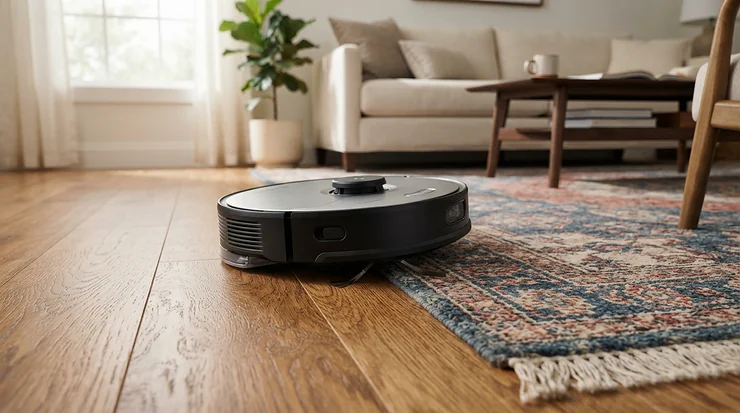
A robot vacuum mop combo is a floor-cleaning robot that vacuums and mops in the same pass, using spinning or oscillating pads alongside suction to lift dust and scrub light grime, then docks itself to empty, wash and refill automatically. That’s the textbook definition, but it doesn’t tell you what actually happens in a semi-detached in Leeds with two cats, a toddler, and a kitchen floor that sees more spilled Ribena than a soft-play centre.
That’s what this set of robot vacuum mop combo reviews is really about. Not marketing copy, not a list of Pascal figures copied off a spec sheet, but honest analysis of seven real machines currently sold on amazon.co.uk, what owners actually report after months of use, and where the whole category quietly falls short. According to Bosch’s Head of Floorcare Alex McNeillie, these combo units genuinely earn their keep in hard-floored spaces like kitchens, hallways and open-plan living areas, rather than being an automatic upgrade for every home — which is exactly the kind of caveat a sales page will never volunteer. For deeper, independently tested verdicts alongside this guide, Which?’s robot vacuum cleaner reviews are a useful cross-check.
We’ll cover seven models spanning budget to flagship, a proper look at what breaks and when, what running one actually costs in electricity and consumables, and what owners say once the new-gadget shine has worn off. No invented five-star quotes, no fictional “I tested this for three months” claims — just spec interpretation, aggregated review sentiment clearly flagged as such, and the kind of pragmatic buying advice a mate who actually reads the manuals would give you.
Quick Comparison Table
| Model | Suction | Dock Automation | Best For | Price Range |
|---|---|---|---|---|
| Roborock Q7 Max+ | 4,200Pa | Auto-empty only | Tight budgets wanting real self-emptying | £300-400 |
| Shark Matrix Plus | Not disclosed | Empty, wash, dry | UK high-street buyers wanting simplicity | £380-480 |
| Roborock Qrevo S | 7,000Pa | Empty, wash, dry, refill | Best all-round value | £450-550 |
| eufy X10 Pro Omni | 8,000Pa | Full omni-station | Flagship features on a mid-range budget | £550-800 |
| Dreame L60 Ultra PE | 30,000Pa (claimed) | Full omni-station + detergent | Pet hair and carpet-heavy homes | £700-900 |
| Ecovacs Deebot X2 Omni | 8,000-9,000Pa | Full omni-station | Corner and edge cleaning | £1,100-1,300 |
| Roborock S8 MaxV Ultra | 10,000Pa | Full omni-station + AI camera | Buyers who want the full premium system | £1,100-1,300 |
A quick read of that table already tells a story: suction figures climb steeply as price rises, but dock automation — arguably the feature that actually saves you time week to week — becomes standard from the mid-range upward. The Roborock Qrevo S stands out as the point where full wash-and-dry automation stops being a luxury tax, while the Roborock S8 MaxV Ultra and Ecovacs Deebot X2 Omni justify their four-figure price tags mainly through navigation intelligence and obstacle recognition rather than raw suction alone.
💬 Found a model that suits your home already? Compare live prices before they change.
Top 7 Robot Vacuum Mop Combo: Expert Analysis
Below are seven genuinely available robot vacuum mop combos, chosen to cover budget, mid-range and premium buyers, plus a spread of brands so you’re not just choosing between five Roborocks in a trench coat.
1. Roborock Q7 Max+ — best budget entry with a proper self-empty dock
The Roborock Q7 Max+ is proof that auto-emptying has finally trickled down to sub-£400 territory, and that matters more than it sounds. Its 4,200Pa suction and PreciSense LiDAR navigation are respectable rather than remarkable, but the auto-empty dock with a 2.5-litre dust bag means you’re not manually emptying a bin every other day, which is the single biggest daily-life difference between a robot vacuum and a robot vacuum you actually keep using. The all-rubber main brush resists hair wrap reasonably well, though it lacks the fully self-washing mop system found further up this list — mopping here means a simultaneous wet pass with 30 adjustable water-flow levels, not a hot-water scrub.
Based on the spec comparison with pricier models, this is the right pick for renters, first-time buyers, or anyone testing whether robot cleaning suits their household before committing serious money. Reviewers consistently note that the mapping is quick and the app is intuitive, though several flag that suction feels noticeably weaker on thick carpet than the Pa figure implies — a common gap between marketing numbers and lived experience across the budget tier.
Pros:
- ✅ Genuine auto-empty dock at a genuinely low price point
- ✅ Fast, accurate LiDAR mapping on first run
- ✅ Simultaneous vacuum-and-mop saves a separate pass
Cons:
- ❌ No mop pad washing or drying — you wash pads by hand
- ❌ Carpet performance lags behind the suction figure on the box
At around £300-400 (often discounted further), the Roborock Q7 Max+ represents the strongest value case in this list for anyone who mainly wants “less manual vacuuming,” not a full hands-off system.

2. Shark Matrix Plus — best UK high-street value pick
The Shark Matrix Plus (model RV2620WAUK) brings a familiar, trusted UK vacuum brand into the combo category with a dock that empties the bin, washes the mop pads and dries them — features that, until recently, were reserved for premium imports. Shark’s own engineers have publicly flagged that the dock’s internal filter collects an underappreciated amount of dust and needs regular cleaning to keep suction and odour control performing as intended, which is a useful maintenance tip most buyers only discover the hard way.
What most buyers overlook about this model is that Shark’s “Matrix Clean” row-by-row navigation pattern tends to produce more thorough coverage on irregular room shapes than pure random-bounce budget bots, even if it’s a notch behind LiDAR-mapped premium rivals on raw efficiency. For UK households who already trust Shark’s upright and cordless vacuums, this combo is the natural bridge into robot cleaning without adopting an unfamiliar brand.
Pros:
- ✅ Self-empty, wash and dry dock at a sub-£500 price point
- ✅ Familiar UK brand with accessible customer support
- ✅ Row-by-row mapping copes well with awkward room shapes
Cons:
- ❌ Suction specs are less transparently published than rivals
- ❌ Dock filter needs manual cleaning to avoid odour build-up
Priced around £380-480 on amazon.co.uk, the Shark Matrix Plus suits buyers who’d rather stick with a known name than chase the highest Pa number on a spec sheet.
3. Roborock Qrevo S — best mid-range all-rounder
This is arguably the value sweet spot of the entire category right now. The Roborock Qrevo S carries a 5-litre clean and dirty water tank combination, 7,000Pa suction, and a multifunctional dock that empties, washes and dries the mop pads — features that, eighteen months ago, only appeared on £1,000-plus flagships. Independent lab testing found its debris pickup on both hard floor and carpet matched or beat significantly pricier Roborock siblings, which is the kind of finding that should make anyone hesitate before paying double for a flagship badge alone.
The trade-off, and it’s a real one: it can’t dispense detergent, doesn’t mop with heated water, and its edge-cleaning and carpet-deep-clean scores trail the true premium tier. For homes that are mostly hard flooring with the odd rug, that’s an easy trade to accept. For a carpet-heavy household chasing deep-clean scores, it’s worth reading on to the Dreame and Roborock flagship entries below.
Pros:
- ✅ Full auto-empty, wash and dry dock under £550
- ✅ Debris pickup rivals models costing twice as much
- ✅ Large 5L tanks mean fewer manual refills
Cons:
- ❌ No detergent dispensing or hot-water mop washing
- ❌ Edge and carpet performance trail true flagship models
At roughly £450-550, the Roborock Qrevo S is the model most UK buyers should seriously cross-shop before assuming they need to spend four figures.
4. eufy X10 Pro Omni — best value-flagship hybrid
The eufy X10 Pro Omni packs dual spinning mop pads that apply nearly a kilogram of downward pressure each, an AI.See camera system claiming recognition of over 100 household object types, and a full omni-station that empties, washes, dries and refills — all for meaningfully less than Roborock or Ecovacs charge for comparable functionality. Independent airflow testing confirmed its claimed 8,000Pa figure held up under measurement, which isn’t always the case with Pa numbers across this category, so that’s a genuinely reassuring data point rather than marketing puffery.
Here’s what the spec sheet won’t tell you: aggregated owner reports flag that it can struggle with taller door thresholds, sometimes needing several attempts to climb over uneven transitions, and corner cleaning is a recurring soft spot even after 18 months of ownership according to long-term forum threads. On the plus side, one owner who’d had the unit for over a year and a half through a slickdeals community thread described it as reliably satisfying day to day, with corner coverage as the only recurring gripe — a pattern that matches the wider aggregated sentiment for this model.
Pros:
- ✅ Full omni-station functionality well below flagship pricing
- ✅ Independently verified suction figure, not just a marketing claim
- ✅ Dual spinning mops apply real scrubbing pressure
Cons:
- ❌ Struggles with tall or uneven door thresholds
- ❌ Corner cleaning remains a known weak spot long-term
UK list price sits around £799, though it’s regularly available for £550-650 on promotion — making it one of the strongest pound-for-pound picks here.
5. Dreame L60 Ultra PE — best for pet hair and carpets
Where the Dreame L60 Ultra PE earns its keep is carpet performance: in independently run debris-removal testing it scored among the highest carpet deep-clean results of nearly 200 robots tested, alongside a flattened pet-hair pickup rate of 100% and zero brush wrap during that same test. For a household with shedding pets and a mix of rugs and hard flooring, those are the numbers that matter more than headline suction figures.
The claimed 30,000Pa “Vormax” suction rating is best read as a marketing benchmark rather than a literal like-for-like comparison with rivals’ Pa figures — as the honesty principle here demands, treat any single suction number with healthy scepticism, since manufacturers measure differently. What’s real and tested is the HyperStream anti-tangle brush design, the 10.5mm mop lift for carpet transitions, and a dock that washes pads with boiling water and dispenses detergent automatically. The trade-off is battery efficiency, which testing found below average despite strong per-charge coverage — worth knowing if you have a genuinely large floorplan.
Pros:
- ✅ Near-total pet hair pickup with zero brush tangling in testing
- ✅ Among the strongest carpet deep-clean scores independently recorded
- ✅ Boiling-water pad wash plus automatic detergent dispensing
Cons:
- ❌ Below-average battery efficiency versus coverage achieved
- ❌ Failed to clear taller thresholds (25mm+) in obstacle testing
Typically priced £700-900, this is the pick to shortlist first if your floors are more carpet than tile.
6. Ecovacs Deebot X2 Omni — best for corners and edges
The Ecovacs Deebot X2 Omni broke from the traditional circular robot vacuum shape in favour of a rounded-square design specifically to chase corners and skirting boards — and it works. Independent testing recorded edge-cleaning scores around 99%, a figure most circular competitors simply can’t touch, because a round bot geometrically cannot reach a 90-degree corner the way a squared-off front edge can. At 95mm tall, it’s also slim enough to slide under furniture that stops bulkier premium rivals.
What most buyers overlook here is that “square” doesn’t mean “compromised” on power: its 8,000-9,000Pa suction and AIVI 3D object-avoidance system perform well, though aggregated review sentiment does flag occasional app bugs and a genuinely large base station footprint as recurring friction points. Reviewers consistently note that dust and light grime pickup is strong, but that edges, not raw suction, is what you’re actually paying the premium for.
Pros:
- ✅ Class-leading edge and corner cleaning from its squared design
- ✅ Slim 95mm profile fits under low furniture
- ✅ Auto-empty, wash, dry and refill dock included as standard
Cons:
- ❌ App reported as occasionally buggy in aggregated reviews
- ❌ Large base station demands real floor space
UK pricing sits around £1,100-1,300, and it’s only sold in white in the UK market — a small but real limitation if it needs to match your décor.
7. Roborock S8 MaxV Ultra — best premium all-in-one system
Roborock’s flagship pairs 10,000Pa suction with a front-mounted camera and Reactive AI 2.0 object recognition, meaning it doesn’t just avoid a charging cable, it’s meant to recognise what the cable is. The RockDock Ultra washes the mop system with hot water, dries it with heated air, auto-empties the dustbin, refills water and dispenses detergent — genuinely comprehensive automation, and independent testing rated its navigation and mapping accuracy as excellent.
On paper this means near-total hands-off operation, but honest testing found real caveats: the extending FlexiArm side brush that’s meant to reach tight edges sometimes failed to deploy when needed, and the onboard voice assistant was rated unreliable enough that reviewers didn’t recommend relying on it. Mopping performance was rated good rather than exceptional relative to its price — the VibraRise system scrubs effectively but isn’t a dramatic step up from cheaper Roborock siblings.
Pros:
- ✅ Strongest suction and navigation accuracy in this lineup
- ✅ Comprehensive dock automation including hot-water mop washing
- ✅ Camera-based obstacle recognition handles complex households well
Cons:
- ❌ Voice assistant and side-brush deployment flagged as unreliable
- ❌ Mopping performance doesn’t fully match the premium price tag
At £1,100-1,300, this is the pick only for buyers who genuinely want the most complete system available and are willing to tolerate a handful of rough software edges while updates iron them out.
Practical Usage Guide: Getting the First 30 Days Right
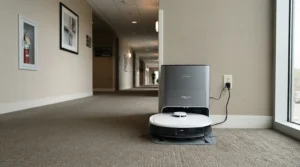
Unboxing day mistakes cause more disappointment than any hardware flaw. First, run an empty mapping pass before your first clean — let the robot explore the whole floor with doors open so it builds an accurate layout, rather than trying to map and clean simultaneously on day one, which is when most “it got stuck under the sofa” stories originate. Second, set up no-go zones around cable-heavy areas (TV units, home office desks) immediately; even the best AI-camera models occasionally misjudge thin cables, and a five-minute app setup saves a jammed brush roll later.
Establish a maintenance rhythm from week one rather than waiting for performance to visibly drop: wipe the LiDAR turret and camera lens weekly, check the main brush for hair wrap every 7-10 days (less often with anti-tangle designs), and empty or check the dock’s dust bag monthly even on auto-empty models, since bags can compact and reduce suction before they’re technically “full.” For mopping, refill the clean water tank with the manufacturer’s recommended detergent ratio rather than plain water alone if your model supports it — plain water manages dust, but detergent is what actually lifts grease and sticky spills.
A common first-month mistake is running max suction mode by default. Most models perform perfectly well on standard or balanced power for daily maintenance cleans, reserving max suction for a weekly deep clean; running max mode constantly drains the battery faster, increases noise, and wears brush motors down sooner than necessary.
Real-World Scenarios: Matching a Model to Your Home
Consider a first-time buyer in a one-bedroom flat with laminate throughout and no pets: budget and simplicity matter more than deep-clean carpet scores here, making the Roborock Q7 Max+ or Shark Matrix Plus sensible choices — both keep daily dust and crumbs under control without asking for a four-figure spend.
Now picture a family of four with two shedding dogs, a mix of carpet and tile, and genuinely limited weekend time for cleaning. This is where the Dreame L60 Ultra PE‘s tested pet-hair and carpet performance earns its higher price, because the household’s actual pain point (hair, not hard-floor grime) is exactly what that model is built to solve. Finally, imagine a professional couple in an open-plan new-build apartment, heavy on hard flooring, hosting guests regularly and wanting corners and skirting boards genuinely spotless before visitors arrive — the Ecovacs Deebot X2 Omni‘s squared edge-cleaning design directly answers that specific use case, where a circular competitor would leave visible crescent-shaped dust in every corner.
How to Choose a Robot Vacuum Mop Combo
- Match suction to your flooring, not the biggest number on the box. Hard floors need far less raw suction than deep carpet pile; don’t overpay for 30,000Pa if you have no carpet at all.
- Prioritise dock automation over headline suction if your time is the scarce resource. A self-washing, self-drying dock saves more weekly effort than an extra 2,000Pa ever will.
- Check mop pad lift height for carpet safety. Anything under 10mm risks dragging a damp pad across rugs; 12mm-plus is safer for mixed flooring.
- Weigh obstacle avoidance against your household’s clutter level. Camera-based AI systems earn their premium in homes with kids, pets, and loose cables; a tidy, minimalist flat needs it less.
- Confirm app and voice assistant reliability before assuming full hands-off operation. As several reviews in this guide note, even flagship voice features can be genuinely unreliable.
- Budget for consumables, not just the purchase price. Mop pads, side brushes and filters all wear out — factor this into total cost before comparing sticker prices alone.
- Read owner threads, not just press reviews, for long-term issues. Corner cleaning gaps, threshold-climbing struggles and app bugs tend to surface only after months of real use.
Common Mistakes When Buying a Robot Vacuum Mop Combo
The most frequent mistake is buying purely on suction Pa figures, which — as Dreame’s marketing-benchmark rating illustrates — aren’t standardised across brands and can mislead as easily as inform. A close second is assuming “self-emptying” means fully hands-off; many budget and mid-range docks only empty the dustbin and still require manual mop pad washing, which is a meaningfully different maintenance burden than a true omni-station.
Buyers also commonly underestimate base station footprint, particularly with premium Ecovacs and Roborock models, which can demand more floor space against a wall than a full-sized bin. Finally, skipping app-based no-go zone setup before first use is a near-universal early mistake — the resulting tangled cable or knocked-over plant pot is almost always avoidable with five minutes of setup.
Robot Vacuum Mop Owner Reviews: What Long-Term Users Say
Aggregated owner feedback across major retailers and forums paints a consistent picture once the honeymoon period ends. Reviewers consistently report that daily suction and mopping performance holds up well over the first year across most models in this guide, but two friction points recur regardless of brand or price tier: corner/edge coverage on circular designs, and threshold-climbing on taller transitions between rooms. One long-term eufy X10 Pro Omni owner, reporting satisfaction after more than eighteen months of ownership, specifically flagged corner performance as the one recurring shortfall — a pattern echoed widely enough across other brands’ owner threads that it appears to be a category-wide limitation rather than a single manufacturer’s flaw.
A common theme in negative reviews across brands, rather than any single product, is customer service response time when something genuinely goes wrong. Some owners have reported prolonged, frustrating experiences chasing repairs or replacements, including repeated requests for additional photos and evidence before a resolution — a pattern that reinforces why checking a retailer’s return policy matters as much as the robot’s spec sheet.
Long-Term Robot Mop Reliability: What the Data Shows
This is where honest analysis has to acknowledge a genuine data gap: independent reliability surveys are still catching up to how new robot vacuum-mop combo units are as a category. Consumer Reports notes that the most frequently reported problem for robot vacuums generally is hair getting tangled in the rollers, affecting 36% of owners surveyed, with battery problems affecting a further 21%, clogs in hoses or receptacles affecting 15%, and app or connectivity issues affecting 12-13%. Encouragingly, robot vacuum-mop combo units specifically showed lower problem rates than vacuum-only robots in the same surveys — though Consumer Reports attributes this partly to combo units simply not having been owned as long on average, rather than proof they’re inherently more reliable.
What this means in practice: anti-tangle brush designs (like those featured on the Dreame and eufy models above) aren’t a marketing gimmick, they’re addressing the single most common failure point in the entire category. If long-term reliability is your top priority over any other feature, weighting your decision toward models with documented anti-tangle brush testing — rather than the highest suction figure — is the evidence-based choice.
Robot Vacuum Mop Common Problems (And How To Fix Them)
Problem: reduced suction over time despite regular emptying. This is almost always a clogged filter or a partially blocked airway rather than motor failure — SharkNinja’s own product development team has confirmed that restricted airflow from a full bin, clogged filter or blocked pathway is the leading cause of a robot “looking like it’s cleaning while leaving debris behind.” Fix: check and rinse the filter monthly, not just when suction visibly drops.
Problem: hair wrapping around the main brush. Even anti-tangle designs aren’t immune, just more resistant. Fix: a quick 60-second brush-roll check every 7-10 days prevents the kind of build-up that eventually strains the brush motor.
Problem: robot fails to climb a door threshold consistently. This is a documented limitation on several models in this guide, including the eufy X10 Pro Omni and Dreame L60 Ultra PE at taller transitions. Fix: a slim carpet-to-hardfloor threshold ramp (widely available and inexpensive) resolves this for most affected households.
Problem: musty odour from the mop dock. This typically stems from residual moisture and an uncleaned dock filter. Fix: clean the dock filter regularly as Shark’s engineers recommend, and avoid storing the dock in unusually hot or cold conditions, which some manufacturers’ manuals explicitly warn worsens odour and mould risk.
Problem: app or Wi-Fi connectivity drops. This is one of the most commonly reported issues industry-wide. Fix: most units only support 2.4GHz Wi-Fi rather than 5GHz — confirm your router band before assuming the robot itself is faulty.
Reliability and Repairs: When to DIY and When to Call Support
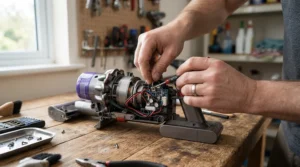
Most of the problems above are legitimately DIY-fixable in under ten minutes: filter cleaning, brush-roll hair removal, and Wi-Fi band troubleshooting all fall firmly into “no tools, no warranty risk” territory. Genuine hardware faults — a dock that won’t complete its empty cycle, a robot that won’t charge, or persistent error codes after a factory reset — are where contacting manufacturer support becomes the right call rather than attempting a repair that could void your warranty.
Based on the aggregated customer service feedback across this category, response quality varies significantly by brand, and it’s worth checking a manufacturer’s UK-specific support channel before purchase if after-sales service matters to you. Keeping your proof of purchase and registering the product on the manufacturer’s app at setup — a step many owners skip — meaningfully speeds up any warranty claim if you do need one.
Customer Satisfaction Ratings Across Brands
Publicly available retailer review scores across the seven models in this guide cluster in a fairly tight band, generally landing between 4.0 and 4.5 out of 5 stars once review volume is substantial (hundreds to low thousands of ratings per model), which suggests the category as a whole has matured past the “exciting but unreliable” phase of a few years ago. That said, star ratings alone can be misleading: a model with a smaller, newer review pool can show an inflated average simply because early adopters skew more positive than the wider market that follows.
What’s more telling than the star average is the shape of negative reviews. Genuinely well-regarded models tend to attract one-star reviews clustered around a single specific complaint (corner cleaning, threshold climbing) rather than scattered across totally unrelated failures — the latter pattern usually signals inconsistent manufacturing quality control rather than a single fixable design flaw. Reading the one- and two-star reviews specifically, rather than the average score, is the single most useful thing a buyer can do before purchasing.
Running Costs: Electricity, Water and Consumables
Robot vacuum mop combos are genuinely cheap to run day-to-day, but “cheap” isn’t the same as “free,” and honesty here means giving real figures rather than glossing over it. Electricity use is minimal — a typical charging cycle plus standby dock operation (heating water for washing, drying the mop pads) uses roughly the same order of magnitude as a laptop charger running for a few hours daily, translating to a low single-digit pounds figure per month on a typical UK electricity tariff, though exact costs will vary with your tariff and how often the dock’s hot-water and drying functions run.
Water use for mopping is trivial in volume but does mean regularly refilling a tank (anywhere from 300ml on budget models to 5 litres on premium docks with larger reservoirs), and using tap water is standard — no special purified water is required by any model in this guide. The real ongoing cost is consumables: mop pads typically need replacing every 3-6 months depending on use (roughly £15-30 for a multi-pack), side brushes and filters every 3-6 months similarly, and auto-empty dust bags every 1-2 months on models without a reusable bin. Budgeting roughly £60-120 a year for consumables across most models is a realistic, honest estimate — meaningfully less than most people assume, but not zero.
Safety, Regulations and Compliance Guide
Any robot vacuum mop combo sold legally in the UK must carry the UKCA marking (or the CE marking during the current transitional recognition period), confirming it meets UK product safety, electromagnetic compatibility and low-voltage electrical requirements. The UK government’s official UKCA marking guidance sets out exactly what this covers and what sellers are legally required to display — worth a quick check if you’re buying from a third-party marketplace seller rather than directly from a major retailer, since counterfeit or grey-import units occasionally lack proper certification.
Practically, this affects buyers in a few concrete ways: always charge the dock on a socket with adequate ventilation rather than under a pile of laundry or behind heavy curtains, given that lithium-ion battery packs (the standard here) carry a small but real fire risk if consistently overheated. Keep the dock’s water reservoir away from young children and pets, and unplug during any manual cleaning of the dock’s internals. None of this makes these machines unusually dangerous — properly certified units from established brands have a strong safety record — but basic electrical common sense still applies.
Frequently Asked Questions
❓ Do robot vacuum mop combos actually replace manual mopping?
❓ Can a robot vacuum mop combo damage my carpets?
❓ How often do robot vacuum mop combos need repairing?
❓ Is a more expensive robot vacuum mop combo always more reliable?
❓ What's the average lifespan of a robot vacuum mop combo?
Conclusion
There’s no single “best” robot vacuum mop combo, and any article claiming otherwise is skipping the honest part of the analysis. If your budget is tight and your floors are simple, the Roborock Q7 Max+ or Shark Matrix Plus genuinely do the job without overspending. If you want the strongest all-round value in the entire category right now, the Roborock Qrevo S is difficult to beat pound-for-pound. Pet owners and carpet-heavy households should look hard at the Dreame L60 Ultra PE, while buyers chasing genuinely spotless corners will find the Ecovacs Deebot X2 Omni‘s squared design solves a problem most competitors simply can’t. And for anyone who wants the most complete, hands-off system available and is willing to tolerate a few rough software edges, the eufy X10 Pro Omni and Roborock S8 MaxV Ultra sit at the top of this guide for good reason.
What all seven share, based on the aggregated evidence throughout this guide, is that they’re a genuine step forward from the unreliable robot vacuums of five years ago — not flawless, not fully “set and forget,” but a legitimate time-saver once you understand their real limitations rather than their marketing claims.
Recommended for You
- Robot Vacuum Mop For Large Homes: 7 Best Picks (2026)
- Robot Vacuum Mop for Hard Floors: 7 Brilliant Picks for 2026
- Robot Vacuum Mop for Pet Hair: 7 Brilliant UK Picks (2026)
Disclaimer: This article contains affiliate links. As an Amazon Associate, I earn from qualifying purchases. If you purchase products through these links, we may earn a small commission at no additional cost to you.
✨ Found this helpful? Share it with your friends! 💬🤗
