In This Article
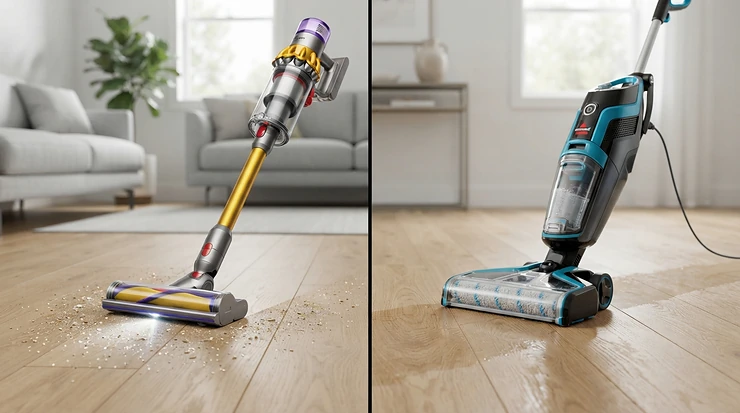
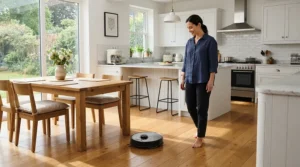
Somewhere between “just buy the all-in-one” and “no, get two separate machines” lies the actual decision most of us are trying to make on a Tuesday night, scrolling reviews with a half-eaten biscuit in hand. The robot vacuum mop combo vs separate mop question sounds like a spec-sheet argument, but it’s really a lifestyle one — how much floor you’ve got, how much muck your household generates, and how much fussing about with dirty water tanks you’re prepared to tolerate. A robot vacuum mop combo vs separate mop is essentially a choice between one machine that vacuums and mops in a single pass with a shared water/brush system, versus two dedicated units — a vacuum and a standalone mop — each doing one job properly. Neither answer is universally right, and the marketing on both sides tends to gloss over the bits that actually matter, like the sensors and robotic drives that make these machines “self-propelled” in the first place and, crucially, how much genuine downward pressure they can put on a mop pad. This guide walks through seven real machines on amazon.co.uk, what the spec sheets don’t tell you, and where each approach quietly falls apart.
Quick Comparison: Combo vs Separate at a Glance
Before diving into individual products, here’s the short version — the trade-offs distilled into a table you can actually use while stood in your kitchen deciding.
| Factor | Combo Robot | Separate Vacuum + Mop |
|---|---|---|
| Upfront cost | One purchase, mid-to-high | Two purchases, often cheaper combined |
| Mopping pressure | Usually lighter, vibration or roller-based | Can be heavier, dedicated pressure systems |
| Carpet handling | Excellent — lifts pad automatically | Vacuum handles carpet; mop stays off it entirely |
| Maintenance | One dock, one water system to service | Two docks, two systems, more moving parts |
| Best For | Households wanting one appliance, minimal fuss | Households prioritising deep-clean mopping and flexibility |
Looking at the table, the real split isn’t cost — it’s what you’re optimising for. A combo wins on convenience and footprint, since you’re servicing one base station instead of two, but a dedicated mop generally applies more consistent downward force because it isn’t also carrying a vacuum motor and dustbin around. If your floors see genuine daily grime (kids, dogs, a kitchen that gets actual use), that pressure gap is worth weighing before you commit to either camp.
💬 Found this comparison useful already? A quick share helps other buyers avoid the same research rabbit hole.
Top 7 Robot Vacuum Mop Combos & Mops: Expert Analysis
We’ve picked seven real machines spanning budget, mid-range and premium, plus one dedicated standalone mop so the combo vs separate comparison isn’t purely theoretical.
1. Roborock Q8 Max — best budget combo for everyday mess
The Roborock Q8 Max earns its spot as the value pick largely because it doesn’t cut corners on the two things that matter most: suction and mop pressure. Its 5,500Pa motor is genuinely capable of lifting embedded crumbs and pet hair from carpet edges, and the mop system applies a consistent 300g of downward pressure while scrubbing — a figure that puts it ahead of plenty of pricier combos that mop with barely a damp wipe.
What most buyers overlook about this model is the 30-level water flow adjustment, which means you’re not stuck choosing between a bone-dry pad and a soaked one; you can match output to floor type room by room. Reviewers consistently note the vacuum-and-mop-simultaneously mode saves real time on weekday cleans, though a few mention the mop cloth needs manual washing rather than being auto-rinsed at the dock, which is the trade-off you accept at this price point.
For anyone new to combo robots and nervous about spending big, this is the sensible entry point.
Pros:
- ✅ 300g mop pressure rare at this budget tier
- ✅ 5,500Pa suction handles carpet and hard floor
- ✅ 30 water flow levels for room-by-room control
Cons:
- ❌ Mop pad requires manual washing, no auto-rinse
- ❌ No hot-water mop wash at the dock
Prices for the Roborock Q8 Max typically sit in the £300-£400 range depending on retailer promotions, and at that price it represents strong value for a first-time combo buyer — check current price before ordering, as availability shifts.
2. Ecovacs Deebot X2 Omni — best for awkward, corner-heavy layouts
The Ecovacs Deebot X2 Omni‘s standout trick is its rotating, extendable mop system, designed specifically to reach into corners and along skirting boards that circular robots typically dance around and ignore. In practice this matters more than it sounds — most flooring grime accumulates precisely in those edges, not the open middle of the room.
Carpet detection sensors on this model automatically increase suction power and lift the mopping pads clear when it senses a rug, which is the baseline expectation now for any combo worth buying in 2026. Based on the spec comparison against similarly priced units, the X2 Omni’s edge-reaching geometry is its genuine differentiator rather than raw suction figures, which sit competitively but not exceptionally in this bracket.
Aggregated review sentiment points to owners in older homes with awkward layouts — bay windows, skirting-heavy Victorian terraces — rating this model highly specifically for corner coverage, while flagging that the base station is on the larger side and needs a dedicated bit of floor space.
Pros:
- ✅ Extendable mop reaches corners other robots miss
- ✅ Automatic carpet detection lifts mop pad
- ✅ Strong fit for irregular, older-home floor plans
Cons:
- ❌ Large base station needs dedicated floor space
- ❌ Suction figures merely competitive, not class-leading
The Ecovacs Deebot X2 Omni generally lands in the £500-£650 range — a mid-range spend that buys genuinely useful geometry rather than just bigger numbers on a spec sheet.
3. Roborock S8+ — best if you don’t mind rinsing the mop yourself
The Roborock S8+ suits buyers who don’t mind rinsing the mop pad themselves in exchange for a machine that otherwise punches well above its price bracket on navigation and vacuuming performance. What the spec sheet won’t tell you, but reviewers note repeatedly, is that the sonic mopping vibration on this model actually scrubs rather than just drags a wet cloth — genuinely useful on dried-on kitchen splashes that a passive pad would simply smear.
Here’s what to weigh: because the base station doesn’t wash the mop automatically, you’re looking at a manual pad-rinse every few sessions, which some households find a minor chore and others find an outright dealbreaker depending on how squeamish they are about handling a dirty mop pad.
LiDAR navigation on this model is precise enough to avoid cable clutter and low furniture without repeated collisions, a genuine step up from the bump-and-turn robots of a few years back. For households wanting near-flagship cleaning performance without paying for a full auto-wash dock, this is the pragmatic middle ground.
Pros:
- ✅ Sonic vibration mopping actively scrubs dried mess
- ✅ Precise LiDAR navigation, minimal furniture collisions
- ✅ Strong performance-to-price ratio in mid-range
Cons:
- ❌ No automatic mop-pad washing at dock
- ❌ Manual rinsing needed every few sessions
Expect to pay somewhere in the £450-£550 range for the Roborock S8+, prices may vary by bundle and current promotions.
4. iRobot Roomba J9+ Combo — best for mixed carpet and hard floor homes
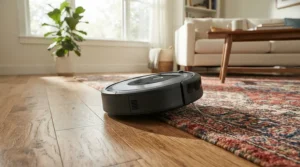
The Roomba J9+ Combo is smart enough to know when it’s on a rug, lifting its mopping pad like the roof of a convertible car so carpets don’t get soaked — a genuinely elegant solution to the oldest complaint about combo robots. This matters enormously for typical UK homes, where hallway tile gives way to a carpeted lounge within a few metres, because older combo designs would either refuse to cross that threshold or leave a damp streak behind them.
The multifunctional dock handles both vacuum emptying and mop maintenance, meaning less manual intervention week to week than budget alternatives demand. Based on the spec comparison with cheaper combos, the iRobot Roomba J9+ Combo‘s obstacle avoidance is a genuine differentiator — the app-guided smart mapping identifies cables, shoes and pet mess with enough reliability that most owners stop supervising early runs after the first week.
Reviewers do flag two consistent gripes worth weighing honestly: the mop pad still needs manual removal and cleaning after each use, and the unit runs on the louder side during vacuum cycles.
Pros:
- ✅ Reliable pad-lift system protects carpet from moisture
- ✅ Excellent obstacle avoidance, minimal supervision needed
- ✅ Multifunctional dock reduces manual maintenance
Cons:
- ❌ Mop pad needs manual removal and cleaning
- ❌ Runs loud during full vacuum cycles
Pricing for the iRobot Roomba J9+ Combo sits in the £700-£900 range at the time of research — a premium spend justified mainly for genuinely mixed-flooring households.
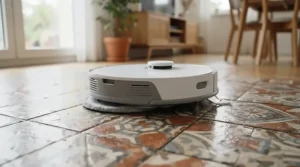
5. iRobot Braava Jet M6 — best standalone mop for the separate-machine camp
If you’re leaning towards the separate-machine side of this whole robot vacuum mop combo vs separate mop debate, the iRobot Braava Jet M6 is the standalone mop most worth pairing with a dedicated vacuum. Its advanced pad system uses electrostatic force to help the device hug the floor for better cleaning results, and because this machine only has one job, it doesn’t have to compromise mop pressure to make room for a vacuum motor and dustbin — the exact trade-off combo units are forced into.
It also dry sweeps pet hair and dust alongside wet mopping, giving it a light pre-clean capability even before your vacuum has done its pass. Honestly, this is the model to pick if your household has already invested in a strong standalone vacuum and just wants a mop that genuinely deep-cleans rather than a bolt-on afterthought.
Aggregated review sentiment consistently praises the streak-free finish on sealed hard floors, though owners note it needs its own separate cleaning runs rather than working in tandem live with a vacuum pass.
Pros:
- ✅ Electrostatic pad delivers streak-free hard-floor finish
- ✅ Dry sweep mode as a light pre-clean pass
- ✅ No compromise on pressure from shared vacuum hardware
Cons:
- ❌ Requires a separate vacuum purchase entirely
- ❌ Runs its own cycle, not simultaneous with vacuuming
The iRobot Braava Jet M6 typically retails in the £350-£450 range, making the combined cost of vacuum-plus-mop worth calculating honestly against a single combo unit before deciding.
6. Dreame X60 Max Ultra Complete — best flagship all-rounder
The Dreame X60 Max Ultra Complete arrived at CES 2026 with genuine engineering ambition rather than incremental spec bumps — a super-slim build paired with a dock that boils the mop pads clean after every session. That hot-water wash step is more than a gimmick: it’s the difference between a mop pad that smells faintly of last week’s kitchen spill and one that comes out properly sanitised every single time, addressing the single biggest hygiene complaint levelled at combo robots generally.
Independent testing of this generation has rated it as one of the strongest all-rounders on the market, reflecting genuinely doubled suction over the previous generation alongside a mop system capable of scrubbing at meaningfully higher pressure than entry-level combos. What most buyers overlook is that the ultra-slim chassis also means better under-furniture access, so it’s actually cleaning the areas a bulkier robot would simply skip.
The trade-off, unsurprisingly, is price — this sits firmly at the top of what most UK households would consider for a single cleaning appliance.
Pros:
- ✅ Dock boils mop pads clean after every use
- ✅ Slim chassis reaches further under furniture
- ✅ Meaningfully stronger suction than prior generation
Cons:
- ❌ Among the most expensive combos on the market
- ❌ Premium price may not suit smaller flats
The Dreame X60 Max Ultra Complete generally lists in the £999-£1,200 range — a serious investment best justified by larger homes with heavy daily traffic.
7. Roborock Saros Z70 — best for households wanting hands-off object clearing
The Roborock Saros Z70 is the model that turns heads for one specific reason: a manipulator arm designed to physically pick small obstacles — socks, cables, the odd dropped sock — out of its own path before cleaning. Whether the manipulator arm makes sense for your household genuinely depends on how much loose clutter your floors typically host; for a tidy adults-only flat it’s a novelty, but for a home with young kids or a shedding dog toy collection, it can meaningfully reduce the “oh no, it’s eaten a sock again” incidents that plague less capable robots.
Beyond the party trick, the underlying vacuum and mop performance is genuinely flagship-tier, with strong suction and a mop system that benefits from the same premium engineering as Roborock’s top-line models.
Here’s what to weigh: the manipulator arm adds mechanical complexity, and early adopter reports suggest it’s best treated as a bonus feature rather than the sole reason to buy, since the core cleaning performance alone already justifies the price for most premium buyers.
Pros:
- ✅ Manipulator arm clears small obstacles automatically
- ✅ Flagship-tier suction and mop performance
- ✅ Reduces stuck-robot incidents in cluttered homes
Cons:
- ❌ Manipulator arm adds mechanical complexity
- ❌ Premium pricing puts it out of reach for many
Expect the Roborock Saros Z70 to sit in the £1,100-£1,400 range at the time of research — very much a top-tier purchase rather than an everyday buy.
Top 7 Compared Side by Side
| Product | Type | Mop Pressure | Best For |
|---|---|---|---|
| Roborock Q8 Max | Combo | 300g | Budget-conscious first-time buyers |
| Ecovacs Deebot X2 Omni | Combo | Moderate | Corner-heavy, older-home layouts |
| Roborock S8+ | Combo | Sonic vibration | Buyers happy to rinse mop manually |
| iRobot Roomba J9+ Combo | Combo | Moderate | Mixed carpet and hard-floor homes |
| iRobot Braava Jet M6 | Standalone mop | Dedicated | Separate-machine households |
| Dreame X60 Max Ultra Complete | Combo | High, hot-wash | Larger homes, heavy daily traffic |
| Roborock Saros Z70 | Combo | Flagship-tier | Cluttered homes wanting obstacle clearing |
The pattern across this table is clear once you line it up: mop pressure climbs steadily with price except where a machine has deliberately dedicated its entire design to mopping alone, like the iRobot Braava Jet M6. If pressure genuinely tops your priority list over convenience, that standalone unit paired with almost any decent vacuum will usually out-mop a mid-range combo costing the same combined total.
💬 One click helps other readers land on the right pick faster — go on, share it.
Practical Usage Guide: Getting the Most From Either Set-Up
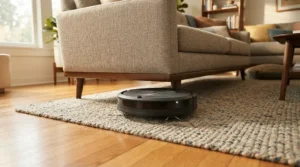
Whichever route you take, the first 30 days determine whether the machine earns its keep or ends up gathering dust in a cupboard. Start by mapping the home properly on the first run rather than letting the robot wander randomly — most modern units, combo or standalone, build a far more efficient cleaning route once they’ve completed one full, uninterrupted lap. Set no-go zones around pet bowls, cable clusters and delicate rugs immediately; this single step prevents the vast majority of “stuck robot” support calls in the first fortnight. For combo units, empty and rinse the clean-water tank weekly even if the app doesn’t flag it — stagnant water left sitting for days genuinely does start to smell, and nobody wants that mopped across their kitchen floor. A common first-month mistake is running the mop function on heavily soiled carpets by accident; double-check carpet detection is switched on before your first unsupervised run. Finally, schedule cleans for when you’re out of the house during the settling-in period — robots navigate more confidently without people and pets constantly changing the furniture layout mid-clean.
Real-World Scenarios: Which Set-Up Actually Fits Your Home
Picture three households weighing this decision. First, a young professional in a one-bed flat with laminate throughout and no pets — here, a budget combo like the Roborock Q8 Max covers every need in one machine, and the simplicity of one dock outweighs any mop-pressure compromise, since daily mess is light. Second, a family of four with two dogs and a mix of tile, carpet and hardwood — this is exactly the scenario the iRobot Roomba J9+ Combo was engineered for, where reliable carpet-lift and obstacle avoidance matter more than raw mop force, because the priority is coverage across varied surfaces without babysitting. Third, a household with a large open-plan kitchen-diner that sees genuine daily grease and spills — here the separate-machine route wins outright, pairing a strong standalone vacuum with the iRobot Braava Jet M6‘s dedicated, uncompromised mop pressure, because no combo at any price fully replicates a machine built to do just one job well.
Combo Robot vs Standalone Mop: The Real Trade-Offs
This is the crux of the whole decision, so it deserves straight talk rather than marketing spin. A combo robot vacuum and mop shares its chassis, water system and often its cleaning pad mechanism between two functions, which inherently means compromise somewhere — usually in mop pressure, since the engineering priority sits with vacuum performance and the mop is bolted on as a secondary feature. A standalone mop, by contrast, dedicates its entire mechanical budget to one job: applying consistent downward force, scrubbing pattern and water delivery purely for mopping. Robot vacuum and mop combos are best thought of as a maintenance tool rather than a full replacement for deep cleaning, according to industry commentary, and that framing genuinely holds up under scrutiny — combos excel at daily upkeep, catching crumbs and light dust before they build up, but they rarely match a dedicated mop on properly ground-in mess. The flip side is convenience: handling vacuuming and mopping as two separate chores versus one combined pass makes an enormous efficiency difference for busy households, and that time saving is real, not marketing fluff. If your floors rarely see anything worse than dust and the odd crumb, a combo wins outright on convenience. If you’re dealing with actual kitchen grease, muddy paw prints or sticky spills on a regular basis, a dedicated mop paired with a separate vacuum will noticeably outperform any combo at a comparable combined price.
Robot Mop Cleaning Quality Comparison: What the Data Actually Shows
Cleaning quality claims are where the marketing gets loudest and the substance gets thinnest, so it’s worth grounding this in something more concrete than app-store star ratings. A widely cited hospital hygiene study comparing cleaning methods found that fresh oiled mops reduced viable bacterial counts on flooring by a mean of 51%, compared to 40% for a tank-model vacuum cleaner and just 5% for sweeping with a broom. That study predates robot mops entirely, but the underlying physics hasn’t changed — a wet, pressure-applying pad lifts more surface residue than suction alone, which is exactly why standalone mops and heavier-pressure combos consistently outperform light-touch combo units on genuinely dirty floors. Where robot vacuums add real value beyond a manual mop is airborne particulate reduction rather than surface bacteria specifically. In practical terms for your kitchen floor: crumbs and dry debris are a vacuum’s job and robots handle that well regardless of type; ground-in grease, dried spills and sticky residue are a pressure-and-scrub job, and that’s where the gap between light combo mopping and dedicated mop pressure becomes genuinely visible, not just theoretical.
Mopping Pressure Limitations Nobody Puts on the Spec Sheet
Here’s the detail most product listings bury or omit entirely: mop pressure is measured in grams of downward force, and the range across the market is wider than most buyers realise — entry-level combos can sit as low as 100-150g, while dedicated pressure systems on premium combos and standalone mops climb past 300-400g. What most buyers overlook about this figure is that it directly determines whether a robot actually scrubs dried mess or merely drags a damp cloth across it, redistributing rather than removing residue. Vibration and sonic scrubbing technologies, found on models like the Roborock S8+, partially compensate for lower static pressure by adding mechanical agitation, but they’re not a full substitute for genuine weight behind the pad. The spec sheet won’t tell you this, but user reports suggest that even flagship combos with hot-water dock washing can still underperform a basic standalone mop on truly baked-on kitchen mess, simply because the combo chassis has to balance weight distribution across both vacuum and mop functions. If pressure is your priority, look specifically for the gram figure in the spec sheet rather than trusting generic “deep clean” marketing language.

Is a Mopping Robot Worth It in 2026?
Short answer: for most households, yes — but the honest long answer has caveats. Three things changed between 2022 and 2026 that turned robot vacuum mops from a gadget into a genuinely useful appliance: reliable self-emptying and self-washing base stations that need attention roughly once a fortnight rather than daily; genuinely dependable carpet-lift mechanisms that no longer soak rugs by mistake; and navigation sophisticated enough to route around real household clutter rather than getting stuck against a chair leg every third run. Modern base stations dock the robot, empty the dustbin into a sealed bag, wash the mop pads with hot water, refill the clean-water tank, drain the dirty-water tank, and dry the mop with warm air, which genuinely is the difference between owning an appliance and adopting a needy hobby. Where it’s not worth it: if your home is entirely carpeted with no hard floors at all, the mop function is dead weight you’re paying for and never using — in that case, skip combos entirely and buy a dedicated vacuum. Where it clearly is worth it: any home with a meaningful stretch of hard flooring and a household too busy for a nightly hoover-and-mop routine.
Cost Comparison: Long-Term Value of Combo vs Separate
The upfront price tag only tells half the story, so let’s run the actual numbers. A solid combo robot sits roughly £350-£900 depending on tier, covering both functions in one machine, one dock, one set of consumables. Going the separate route, you’re typically looking at £250-£500 for a competent standalone robot vacuum plus £350-£450 for a dedicated mop like the iRobot Braava Jet M6 — meaning the combined separate-machine spend often lands close to, or even above, a premium combo, while requiring two docks’ worth of floor space and two separate consumable-replacement schedules (filters, brushes, mop pads, batteries, doubled). Where separate machines can claw back value long-term is lifespan flexibility: if one unit fails or becomes obsolete, you replace only that machine rather than the entire combined system. Where combos win on cost is simplicity of maintenance — one water system, one filter type, one app to manage — which translates into fewer forgotten consumable purchases and, anecdotally, less abandoned-in-a-cupboard syndrome after the novelty wears off.
Common Mistakes When Buying a Robot Vacuum Mop Combo
Buyers repeatedly fall into the same handful of traps, and most are avoidable with five minutes of homework before purchase. The biggest is assuming all combos handle carpet safely by default — older or budget models without reliable pad-lift mechanisms can genuinely soak a rug, so always confirm automatic carpet detection is standard rather than an optional extra. A close second is ignoring mop pressure entirely in favour of suction figures; a 6,000Pa vacuum with a 100g mop is still a weak mopper regardless of how impressive the suction number looks on the box. Buyers also frequently underestimate base station footprint — some premium docks are genuinely bulky, and cramming one into a tight utility cupboard defeats the “hands-off convenience” the whole category promises. Another common error is skipping app compatibility checks; not every combo plays nicely with existing smart home ecosystems, which matters if scheduling around a routine is part of the appeal. Finally, plenty of buyers assume auto-emptying and auto-mop-washing are the same feature — they’re not, and cheaper models sometimes offer one without the other.
When You’ll Still Need Manual Mop Touch-Ups
Even the best combo or dedicated mop on this list won’t fully replace a bucket-and-mop session forever, and pretending otherwise sets unrealistic expectations. Dried, baked-on spills — the kind that sit for a day before anyone notices — generally need a manual pre-soak or scrub before a robot pass will lift them cleanly; robots are built for maintenance cleaning, not restoration jobs. Skirting boards, stair edges and tight corners around cabinet legs remain stubbornly manual-mop territory for most robots, even models like the Ecovacs Deebot X2 Omni with extendable edge-reaching design, since physical geometry still limits full coverage. Grout lines on tiled floors are another consistent weak spot — robot mop pads glide across the surface rather than working into recessed grout the way a manual scrub brush does. The realistic expectation, backed by aggregated reviewer sentiment across every product on this list, is a robot handling 80-90% of routine floor maintenance, with an occasional manual touch-up covering the remaining stubborn spots — not a full retirement of the mop bucket in the cupboard under the stairs.
FAQ
❓ Is a robot vacuum mop combo better than a separate mop?
❓ Do robot mops actually clean or just push water around?
❓ Can a robot mop replace manual mopping completely?
❓ How much does a good robot vacuum mop combo cost in the UK?
❓ Will a robot mop damage my carpet?
Conclusion
There’s no universally correct winner in the robot vacuum mop combo vs separate mop debate — only the right answer for your specific floors, mess level and patience for maintenance. Combos like the Roborock Q8 Max or Dreame X60 Max Ultra Complete genuinely earn their keep for households wanting one appliance handling daily upkeep with minimal fuss, and the 2026 generation has closed the carpet-safety gap that made earlier combos a genuine gamble. But if your floors see real, regular grime — cooking grease, muddy paws, dried spills — a standalone mop like the iRobot Braava Jet M6 paired with a dedicated vacuum will out-clean almost any combo at a comparable combined spend, simply because it isn’t compromising pressure to also carry a dustbin. Match the machine to your actual mess, not the machine everyone else is talking about, and you’ll get years of genuinely useful service either way.
Recommended for You
- Robot Vacuum Mop Combo Reviews: 7 Best Picks For UK Homes (2026)
- Robot Vacuum Mop For Large Homes: 7 Best Picks (2026)
- Robot Vacuum Mop for Hard Floors: 7 Brilliant Picks for 2026
Disclaimer: This article contains affiliate links. As an Amazon Associate, I earn from qualifying purchases. If you purchase products through these links, we may earn a small commission at no additional cost to you.
✨ Found this helpful? Share it with your friends! 💬🤗
