In This Article
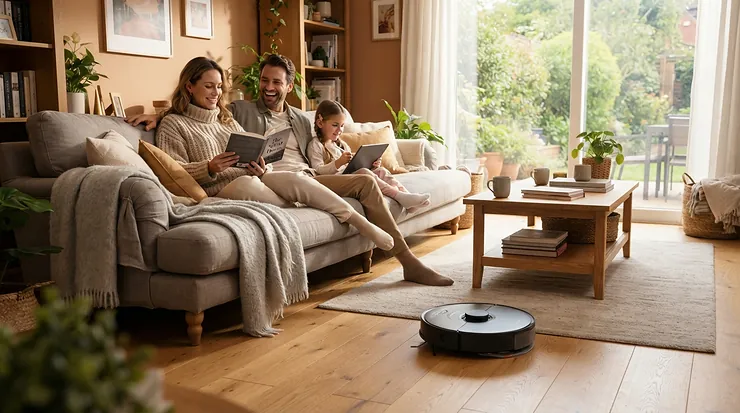
There’s a specific kind of dread that comes with hearing the bin-full alarm on your robot vacuum at 11pm on a Sunday. You know the one — that plaintive little beep that means someone (you) has to crouch down, prise open a dusty compartment, and breathe in a small cloud of what your carpet has apparently been hiding for weeks. A self-emptying robot vacuum is a robotic cleaner that docks itself after every run and automatically transfers its onboard bin into a much larger container inside the charging station, so you’re only dealing with that ritual once every few weeks instead of every few days.
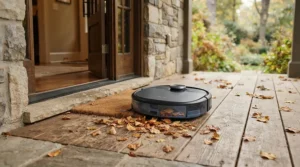
That’s the whole appeal in one sentence, but the reality is a bit more layered. Prices have dropped hard over the last two years — features that once demanded a four-figure sum now sit comfortably in the mid-hundreds — and yet the market has also become a genuine minefield of near-identical suction numbers and confusingly branded docks. If you’ve typed “self-emptying robot vacuum” into a search bar and been met with forty tabs of similar-looking black boxes, you’re not alone, and you’re not wrong to be a little sceptical.
This guide cuts through that noise (sorry). We’ve pulled together seven real, currently available models spanning true budget picks through to full-fat premium systems, each backed by verifiable specifications and aggregated review sentiment rather than marketing fluff. According to independent testing from outlets like Which?’s robot vacuum lab, the gap between a genuinely good machine and a disappointing one often has nothing to do with price — it’s about matching the right dock technology and navigation type to your actual home. Let’s get into it.
Quick Comparison Table: Self-Emptying Robot Vacuums at a Glance
Before the deep dive, here’s the short version for anyone reading this on a lunch break. All seven models below include a genuine self-emptying dock — no exceptions, no asterisks.
| Product | Price Range | Suction | Self-Empty Duration | Best For |
|---|---|---|---|---|
| TP-Link Tapo RV30 Max Plus | Under £250 | ~3,000Pa | Up to 45 days | First-time buyers, small flats |
| Roborock Q5 Max+ | £220-£300 | ~5,500Pa | Up to 60 days | All-round budget value |
| Eufy Clean L60 with Self-Empty Station | £300-£380 range | 5,000Pa | Up to 60 days | Hands-off basics, hair detangling |
| Shark Matrix Plus | Mid-£400s | Strong | Up to 45 days | Pet hair on hard floors and low-pile carpet |
| eufy X10 Pro Omni | £520-£700 range | 8,000Pa | Up to 70 days | Self-washing mop, full automation |
| Dreame L40 Ultra Gen 2 | £700-£900 range | Very high | Up to 75 days | Mixed floors, obstacle-heavy homes |
| Roborock S8 Pro Ultra | Around £900-£1,200 | Flagship-tier | Up to 90 days | Total hands-off, pet owners who want it all |
Looking at the spread here, the jump from the TP-Link Tapo RV30 Max Plus to the Roborock Q5 Max+ is smaller in price than you’d expect for the leap in navigation quality — the latter’s LiDAR mapping alone justifies the difference for most multi-room homes. Meanwhile, buyers fixated on suction numbers should note that self-emptying duration matters just as much day to day, since a smaller dust bag means more frequent bag changes regardless of how strong the motor is. If your household includes a shedding dog or cat, skip straight to the Shark Matrix Plus or eufy X10 Pro Omni rows — the extra £150-£250 buys real anti-tangle engineering that budget models simply don’t have.
💬 Just one click — help others make better buying decisions too!😊
Top 7 Self-Emptying Robot Vacuums: Expert Analysis
1. TP-Link Tapo RV30 Max Plus — best entry-level pick under £250
The TP-Link Tapo RV30 Max Plus proves that a genuinely affordable self-emptying robot vacuum no longer means sacrificing basic intelligence. It runs LiDAR-based navigation rather than the bump-and-guess method that older budget bots relied on, which in practice means it maps your flat properly on the first run instead of wandering into the same skirting board four times.
The ~3,000Pa suction sits at the lower end for this category, so it’s genuinely built for hard floors, thin carpet, and homes without a resident shedding animal — on thick pile it will need repeat passes. Aggregated buyer feedback on Amazon UK consistently flags the app as simple to the point of basic, but praises the dock’s compact footprint, which matters if you’re squeezing this into a London one-bed.
As an entry-level auto-empty model, this is the one to recommend to a first-time robot vacuum owner who wants to test the concept without committing serious money.
Pros:
- ✅ Genuine LiDAR mapping at a properly budget price point
- ✅ Compact dock suits small flats and box rooms
- ✅ Simple app makes setup painless for non-tech buyers
Cons:
- ❌ Suction struggles on thicker carpet and heavy pet hair
- ❌ Smaller dust bag means more frequent emptying than pricier rivals
At under £250, this is one of the cheapest true self-emptying, LiDAR-navigating machines currently sold on Amazon UK, and for a small hard-floor home, it’s difficult to beat that value.
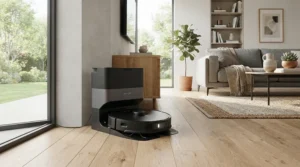
2. Roborock Q5 Max+ — best all-round budget performer
If you’re only going to remember one model from the budget tier, make it the Roborock Q5 Max+. Its 5,500Pa of suction is a proper jump from entry-level bots — enough to handle low-to-medium pile carpet without visibly struggling — and it pairs that with Roborock’s dual anti-tangle DuoRoller brush, which does a noticeably better job resisting long hair wraps than the single-brush designs common at this price.
What most buyers overlook about this model is that it runs the same core app experience as Roborock’s £1,000+ flagships: room-by-room scheduling, no-go zones, and remote-control drive mode are all present, just without the mopping hardware. Reviewers consistently note that the self-empty dock is one of the quietest at this price bracket, and the dust bag comfortably lasts 45-60 days of typical use in a two-bedroom home.
For anyone specifically hunting for an affordable self-emptying robot vacuum that doesn’t feel like a compromise, this is the benchmark others get measured against.
Pros:
- ✅ 5,500Pa suction handles carpet better than most budget rivals
- ✅ Full-featured Roborock app, including no-go zones and scheduling
- ✅ Anti-tangle brush copes well with pet and human hair
Cons:
- ❌ No mopping function on this particular variant
- ❌ Dock is larger than the ultra-slim TP-Link Tapo alternative
Positioned in the £220-£300 range, the value-for-suction ratio here is genuinely hard to argue with — this is where “budget” stops meaning “compromised.”
3. Eufy Clean L60 with Self-Empty Station — best value for hands-off cleaning
The Eufy Clean L60 with Self-Empty Station leans hard into the “set it and forget it” pitch, and largely delivers on it. Its iPath laser navigation combined with AI.Map 2.0 builds accurate floor plans quickly, while the 5,000Pa motor is well-matched to mixed hard floor and carpet homes rather than being optimised purely for one surface type.
What actually separates it from cheaper Eufy models is the active hair-detangling comb built into the brush roll — a feature that historically only appeared on the brand’s premium tier, and one that pet owners will genuinely notice in reduced maintenance. Eufy’s own materials claim up to 60 days of hands-free running between bag changes, a figure that lines up with what most household dust output would realistically produce.
Aggregated user sentiment across UK retail listings tends to praise the quiet operation during normal cleaning runs, with the emptying burst itself being the only noisy moment in the whole cycle.
Pros:
- ✅ Active hair-detangling comb rare at this price tier
- ✅ Up to 60 days between dust bag changes
- ✅ Laser navigation copes well with multi-room layouts
Cons:
- ❌ No mop function included on the Self-Empty Station bundle
- ❌ App occasionally lags behind Roborock’s in polish and speed
Sitting in the £300-£380 range, this is arguably the smartest step up for anyone who’s already tried a basic model and wants meaningfully less maintenance without jumping to premium pricing.
4. Shark Matrix Plus — best for pet hair on a mid-range budget
Pet owners searching specifically for a self-emptying robot vacuum tend to land on the Shark Matrix Plus, and for good reason. Its self-cleaning brush roll uses a comb mechanism that actively strips wound hair as it spins, which addresses the single biggest maintenance headache of owning any robot vacuum in a house with fur-shedding animals.
Combined with LiDAR-based Matrix Clean navigation — Shark’s system for methodical, overlapping cleaning passes rather than random coverage — it does a thorough job on both hard flooring and the low-pile carpet common in UK rental properties. Reviewers consistently report that the self-cleaning brush genuinely reduces the need for manual hair-pulling to something like once a month rather than once a week, which is the specific pain point this model is engineered to solve.
Shark’s UK customer support also gets repeated positive mentions in aggregated feedback, which matters more than people expect when something inevitably needs troubleshooting eighteen months in.
Pros:
- ✅ Self-cleaning brush roll drastically cuts manual hair removal
- ✅ Matrix Clean navigation gives thorough, methodical coverage
- ✅ Strong UK customer support reputation in aggregated reviews
Cons:
- ❌ No mopping capability, unlike some rivals at similar pricing
- ❌ Heavier and bulkier robot unit than the Roborock Q5 Max+
At a price in the mid-£400s, this sits squarely as the pet-hair specialist of the mid-range tier — a targeted purchase rather than a generalist one.
5. eufy X10 Pro Omni — best self-washing mop system
Step up to the eufy X10 Pro Omni and you’re paying for genuine full automation rather than just stronger suction. Its Omni Station doesn’t just empty the dustbin — it washes the twin rotating mop pads in hot water and dries them with warm air, which solves the unglamorous but very real problem of a damp mop pad turning sour if left sitting for a day.
The 8,000Pa suction motor is a proper step up from anything in the budget tier, and the spinning mop heads apply genuine downward pressure rather than just dragging a wet cloth across the floor, meaning sticky kitchen spills actually lift rather than smear. What the spec sheet won’t tell you, but aggregated owner feedback does, is that the auto-refill water tank genuinely extends unattended runtime — you’re not just avoiding dust bag changes, you’re avoiding topping up water for weeks at a time too.
As an Anker-owned brand, eufy has built a reputation for undercutting Roborock and iRobot on price for comparable features, and the X10 Pro Omni is the clearest example of that strategy paying off.
Pros:
- ✅ Self-washing, self-drying mop pads prevent sour odours
- ✅ 8,000Pa suction handles carpet and hard floors confidently
- ✅ Auto-refilling water tank extends genuinely hands-off runtime
Cons:
- ❌ Bulkiest dock of the mid-range group, needs real floor space
- ❌ Premium pricing puts it close to entry-level flagship territory
In the £520-£700 range, this is the tipping point where “self-emptying” quietly becomes “barely-ever-touch-it,” and for busy households, that jump is worth the money.
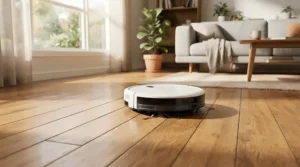
6. Dreame L40 Ultra Gen 2 — best premium pick for mixed floors
The Dreame L40 Ultra Gen 2 is the slightly less famous name on this list, and that’s precisely why it belongs here — Dreame has spent the last two years quietly matching the bigger brands feature-for-feature while staying a notch cheaper. Independent testers have flagged it specifically as a strong value premium choice for homes with mixed flooring and genuine obstacle clutter — think trailing charging cables, low coffee tables, and the assorted chaos of a family home.
Its extending mop arm design is built to reach right up against skirting boards and into corners that fixed circular mop pads simply can’t touch, addressing one of the most common complaints levelled at robot mops generally. The all-in-one dock handles emptying, mop washing, and drying in a single automated sequence, putting it firmly in the same functional bracket as machines costing considerably more.
Based on the spec comparison against its better-known rivals, the L40 Ultra Gen 2’s main selling point isn’t raw power — it’s obstacle handling in genuinely messy, lived-in homes.
Pros:
- ✅ Extending mop arm reaches edges and corners properly
- ✅ Full auto-empty, wash and dry dock at a lower price
- ✅ Strong obstacle avoidance for busy, cluttered households
Cons:
- ❌ Brand recognition and UK spares availability trail Roborock and Shark
- ❌ App has a steeper learning curve than Eufy’s simpler interface
Priced around £700-£900, this is the pick for buyers who want flagship-adjacent functionality without paying the flagship-adjacent brand tax.
7. Roborock S8 Pro Ultra — best flagship for total hands-off cleaning
The Roborock S8 Pro Ultra sits at the top of this list because, frankly, it does everything the cheaper models on this page do, plus the handful of extra steps that genuinely eliminate manual maintenance. Its Ultra Station empties the dustbin, washes the mop pad with hot water, dries it with warm air to prevent mould and odour, and refills the clean water tank automatically — a complete loop that only needs your attention roughly once every couple of months.
The sonic mopping arm scrubs at high frequency for genuinely stubborn dried-on messes, and — critically for anyone with carpet — the mop physically lifts itself clear of carpet fibres so you’re never dragging a wet pad across your rug. Which?’s testing of comparable flagship models has repeatedly highlighted this lift-and-avoid mopping behaviour as one of the clearest differentiators between genuinely premium robot vacuums and mid-range pretenders.
Aggregated owner sentiment does flag the price as a real barrier, but almost universally reports that day-to-day involvement drops to something close to zero once the initial mapping and dock setup is complete.
Pros:
- ✅ Fully automated empty, wash, dry and refill cycle
- ✅ Sonic mopping arm lifts automatically to protect carpet
- ✅ Widely regarded as class-leading navigation and obstacle avoidance
Cons:
- ❌ Highest price point of any model on this list
- ❌ Considerable overkill for a small flat or single-person household
At around £900-£1,200, this is squarely a purchase for larger homes with pets, multiple floors, and buyers who genuinely never want to think about vacuuming again.
Setting Up and Maintaining Your Self-Emptying Robot Vacuum
Buying the right hardware is only half the job — a badly set-up self-emptying robot vacuum performs like a mediocre one, regardless of how much you spent. In your first week, run a full mapping cycle with doors open throughout the flat or house; interrupting this early creates patchy maps that cause repeated missed rooms for months afterwards. Place the dock against a flat wall with roughly 50cm of clearance either side — docks with restricted clearance regularly fail to auto-align, which is one of the most common “why won’t it charge” complaints in owner forums.
For ongoing maintenance, a genuinely useful habit is checking the brush roll weekly for the first month, then monthly once you’ve established how much hair or debris your specific household generates. Replace HEPA filters roughly every two months for models that see daily use — a clogged filter is one of the biggest hidden causes of reduced suction that owners mistake for motor failure. If your model includes mop pads, remove and rinse them after particularly messy runs even on self-washing systems, since built-up grime in the pad’s stitching can eventually cause a slightly musty smell that the auto-wash cycle alone won’t fully clear. Finally, schedule cleaning runs for while you’re out or asleep in another room — beyond the noise consideration covered later, this also avoids the robot getting stuck under furniture while you’re mid-meeting on a video call.
Real-World Scenarios: Which Self-Emptying Robot Vacuum Fits Your Life
Specs only mean so much in the abstract, so here are three genuinely common UK household profiles matched against the products above.
The renter in a one-bed flat, budget under £300, no pets. This is the TP-Link Tapo RV30 Max Plus or Roborock Q5 Max+ territory exactly. Neither needs a huge amount of floor space for its dock, both handle hard flooring and thin carpet without complaint, and the lower suction ceiling simply isn’t a limitation in a space this size.
The family of four with a shedding Labrador and a mix of hardwood and carpeted rooms, budget £400-£700. The Shark Matrix Plus solves the hair problem specifically, while the eufy X10 Pro Omni solves both the hair and the mopping problem at once — if the household regularly deals with muddy paw prints and kitchen spills, the extra £100-£200 for genuine mop-washing capability earns its keep quickly.
The multi-storey house with an elderly relative, allergy sufferers, and daily use expected, budget £700+. Here the Dreame L40 Ultra Gen 2 or Roborock S8 Pro Ultra make more sense — the sealed bag systems on premium docks specifically benefit allergy sufferers by trapping fine dust rather than releasing it back into the air, and the longer self-empty intervals matter more when several floors mean more frequent cleaning cycles overall.
Common Problems and Practical Fixes
Even a well-chosen self-emptying robot vacuum runs into predictable snags. Here are five you’ll likely hit, and what actually fixes them.
Problem: the robot keeps missing the same patch of floor. This is almost always a mapping issue rather than a hardware fault — delete the existing map and re-run a full clean with all internal doors open, and resist the urge to interrupt it partway through.
Problem: the self-empty dock isn’t triggering after every run. Check that the robot is docking fully flush against the charging contacts; even a few millimetres of misalignment, often caused by a nearby rug edge, will stop the auto-empty sequence firing.
Problem: reduced suction that seems to appear gradually. Nine times out of ten this is a partially clogged filter or a hair-wrapped brush roll rather than motor degradation — a five-minute clean usually restores full performance.
Problem: the mop pad smells musty despite a self-washing dock. Run a manual hot-water wash cycle if your model supports one, and check the dock’s clean-water tank isn’t sitting empty, since the wash cycle needs fresh water to actually work.
Problem: the app keeps losing connection to the robot. This is almost always a router issue rather than a robot fault — most self-emptying models use 2.4GHz Wi-Fi specifically, and a router set to 5GHz-only will silently refuse to pair.
How to Choose an Affordable Self-Emptying Robot Vacuum
Choosing the right affordable self-emptying robot vacuum comes down to matching a handful of specific criteria to your actual home, rather than chasing the highest suction number on the box. Here’s the process worth following:
- Measure your floor space and floor type first. A small flat with mostly hard flooring needs far less suction power than a multi-room house with thick carpet, so don’t overspend on power you won’t use.
- Decide if mopping matters to you. If your home is mostly carpeted, skip mop-equipped models entirely and put that budget toward suction and self-empty duration instead.
- Check the self-empty interval against your household’s dust output. A pet-owning family will fill a dust bag far faster than a single professional working from an office five days a week.
- Confirm the navigation type. LiDAR and structured-light camera systems consistently outperform basic gyroscope-only navigation, even on genuinely affordable self-emptying robot vacuum models.
- Read aggregated review sentiment on app reliability, not just cleaning performance. A brilliant vacuum with a broken app is a daily frustration regardless of suction numbers.
- Factor in ongoing consumable costs. Dust bags, filters, and brush rolls all need periodic replacement, and prices vary meaningfully between brands.
- Check UK-specific spares and support availability. A bargain from a brand with no local stockist can become an expensive paperweight the moment a part fails.
Common Mistakes When Buying a Budget Auto-Empty Robot Vacuum
The single most common mistake buyers make with a budget auto-empty robot vacuum is assuming that “self-emptying” automatically means “low maintenance” full stop — it reduces one specific chore, but filters, brush rolls, and sensors still need regular attention regardless of price tier. A close second is fixating on suction figures without checking navigation type; a 6,000Pa motor bolted to bump-and-guess navigation will still miss entire rooms, while a well-mapped 3,000Pa model methodically covers every corner. Buyers also frequently underestimate dock footprint, ordering a compact-looking robot only to discover the charging station itself needs considerably more wall space than expected. Another recurring pitfall is ignoring dust bag compatibility and cost — some budget auto-empty robot vacuum models use proprietary bags that cost noticeably more per unit than generic alternatives, quietly eroding the initial savings over a year or two. Finally, plenty of first-time buyers skip checking Wi-Fi band compatibility entirely, then discover post-purchase that their router’s 5GHz-only setup won’t pair with a 2.4GHz-only robot.
Self-Emptying vs Traditional Robot Vacuums: What Changes in Practice
The theoretical case for self-emptying is obvious, but it’s worth being specific about what actually changes day to day compared with a standard robot vacuum or a traditional upright.
| Feature | Self-Emptying Robot Vacuum | Standard Robot Vacuum | Traditional Upright Vacuum |
|---|---|---|---|
| Manual emptying frequency | Every 30-90 days | Every 1-3 cleaning runs | Every single use |
| Upfront cost | Higher | Lower | Varies widely |
| Ongoing consumables | Dust bags, filters | Filters only | Bags or none (bagless) |
| Hands-off scheduling | Genuinely hands-off | Requires regular manual emptying | Not applicable |
| Best For | Busy households, pet owners | Budget-conscious, low-mess homes | Deep cleans, stairs, upholstery |
The practical takeaway here is that a self-emptying robot vacuum shifts effort rather than eliminating it entirely — you’re trading frequent small tasks (emptying a tiny bin every couple of days) for infrequent slightly larger ones (swapping a dust bag every couple of months). For pet owners and busy families, that trade is almost always worthwhile, but for someone living alone with no carpet and minimal daily mess, a standard robot vacuum may deliver 90% of the benefit for considerably less money. A traditional upright still earns its place for stairs, upholstery, and genuinely deep periodic cleans that no robot currently handles well.
Base Noise Levels: What the Spec Sheet Won’t Tell You
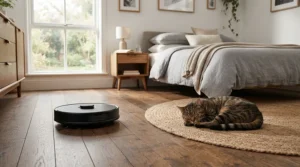
Manufacturer decibel ratings for robot vacuums almost never mention the one noise that actually surprises new owners: the self-empty dock itself. According to HSE’s guidance on noise exposure, sustained sound above 85dB(A) poses a genuine hearing risk over an eight-hour working day — robot vacuums stay well under that during normal cleaning at roughly 55-65dB, comparable to a quiet conversation. The genuine surprise is the emptying cycle itself, which independent testing consistently measures at 70-82dB for a sharp 10-15 second burst — loud enough to briefly startle a napping cat or interrupt a phone call in the next room, even if it poses no real safety concern at that duration.
What most buyers overlook is that this burst is largely unavoidable, since it’s simply physics: pulling debris at speed through a narrow tube into a sealed bag requires genuine suction force, and there’s no way to do that silently. The models that manage noise best don’t actually run quieter emptying cycles — they let you schedule when that cycle happens. Most premium docks, including the Roborock S8 Pro Ultra and eufy X10 Pro Omni, include a “Do Not Disturb” mode that delays the empty cycle until a set time, which is the single most effective fix for anyone sensitive to sudden noise or living with light sleepers. Budget models like the TP-Link Tapo RV30 Max Plus sometimes lack this feature entirely, so if base noise levels are a genuine concern in your household, check for scheduled DND support before you buy rather than after.
Entry-Level Auto-Empty Models for Small UK Homes
Small flats and studios have specific requirements that larger houses simply don’t, and entry-level auto-empty models are increasingly built with exactly this buyer in mind. Floor space for a dock matters disproportionately in a compact home — the TP-Link Tapo RV30 Max Plus‘s slim charging station is a genuine advantage here, tucking into a corner without eating into already-limited storage. Suction requirements also drop meaningfully in a smaller footprint, since there’s simply less floor area to cover per cleaning cycle and typically less accumulated dust than in a family home with multiple bedrooms.
For renters specifically, an entry-level auto-empty robot vacuum sidesteps one particular headache: many rental agreements restrict drilling or permanent fixtures, and a robot vacuum requires none of that, unlike some smart home devices. The Roborock Q5 Max+ is worth the modest price jump over the absolute cheapest options even in a small flat, since its stronger suction handles the transition strips and door thresholds common in older UK conversions more gracefully than lower-powered rivals. One genuinely underrated tip for small-home buyers: check the dock’s dust bag capacity relative to its self-empty interval claim, since manufacturers often test these figures in larger properties, meaning real-world performance in a genuinely compact flat can actually exceed the advertised number.
Self-Emptying Vacuum Deals: Timing Seasonal Discounts Right
Self-emptying vacuum deals follow a fairly predictable rhythm across the UK retail calendar, and buying at the right moment can meaningfully shrink your budget without settling for a lesser model. Amazon Prime Day in July and Black Friday through Cyber Monday in late November are consistently the two biggest windows for genuine price drops on robot vacuums, with historical patterns showing 20-35% reductions on mid-range and premium models specifically. January also tends to bring smaller but real seasonal discounts as retailers clear stock ahead of spring product refreshes, which is often the best window for last-generation flagship models being quietly discounted to make room for new releases.
A genuinely useful habit is setting a price-tracking alert several weeks before a known sale event rather than during it, since some retailers inflate prices slightly beforehand to make the “discount” appear larger than it actually is — a practice worth watching for regardless of which retailer you’re buying from. It’s also worth noting that Amazon’s own policies prohibit sellers from displaying misleading strike-through pricing, so a genuine seasonal discount should be verifiable against the product’s actual price history rather than taken at face value. If you’re specifically after one of the pricier picks on this list, like the Dreame L40 Ultra Gen 2 or Roborock S8 Pro Ultra, patience around these known sale windows can realistically save you £100-£300 compared with buying at full list price.
Long-Term Cost and Maintenance: The Real Total Cost of Ownership
The sticker price of a self-emptying robot vacuum is only part of the real cost — dust bags, replacement filters, and brush rolls all add up over a typical three-to-four-year ownership period.
| Product | Price Range | Estimated Annual Consumables | Value Verdict |
|---|---|---|---|
| TP-Link Tapo RV30 Max Plus | Under £250 | £20-£30 | Excellent entry value |
| Roborock Q5 Max+ | £220-£300 | £25-£35 | Best cost-per-feature ratio |
| Eufy Clean L60 | £300-£380 range | £30-£40 | Strong mid-tier value |
| Shark Matrix Plus | Mid-£400s | £35-£45 | Good for pet-hair households specifically |
| eufy X10 Pro Omni | £520-£700 range | £40-£55 | Justifiable for full automation |
| Dreame L40 Ultra Gen 2 | £700-£900 range | £45-£60 | Fair for flagship-tier features |
| Roborock S8 Pro Ultra | £900-£1,200 range | £50-£65 | Premium, but genuinely comprehensive |
The clear pattern here is that consumable costs scale roughly with feature complexity rather than with price alone — a mop-equipped dock simply has more parts that wear out than a vacuum-only one. Budget buyers shouldn’t assume they’re saving money purely on the sticker price, since a cheaper model with proprietary, hard-to-source dust bags can occasionally cost more per year in consumables than a mid-range model using widely available generic parts. Over a genuine three-year ownership window, the Roborock Q5 Max+ and eufy Clean L60 both post the strongest total-cost-of-ownership figures on this list, balancing purchase price against realistic upkeep.
Features That Actually Matter (And Those That Don’t)
Marketing copy for robot vacuums has become genuinely difficult to parse, so here’s an honest filter. LiDAR navigation actually matters — it’s the single biggest determinant of whether a robot cleans systematically or randomly, full stop. Self-empty duration genuinely matters too, since it’s the entire point of buying this category of vacuum over a standard model. Anti-tangle brush design matters enormously for pet owners specifically, less so for hard-floor-only, pet-free households.
What matters considerably less than the marketing suggests: headline suction figures beyond roughly 5,000-6,000Pa, where returns diminish sharply for typical UK homes without industrial-level mess. Multi-floor mapping capacity for five-plus levels is largely irrelevant to the overwhelming majority of UK properties, which rarely exceed two or three floors. Voice assistant integration is a pleasant convenience rather than a genuine differentiator, since app scheduling achieves the same result for most households. And AI-powered object recognition claiming to identify “300+ object types” sounds impressive but, based on aggregated owner feedback, mostly boils down to reliably avoiding shoes, cables, and pet mess — which is genuinely useful, just not quite the sci-fi feature the marketing implies.
Frequently Asked Questions
❓ Are self-emptying robot vacuums worth it?
❓ How often do you need to empty a self-emptying vacuum's bag?
❓ Can you get a good, affordable self-emptying robot vacuum?
❓ Are self-emptying robot vacuum docks loud?
❓ Do self-emptying robot vacuums work on carpet as well as hard floors?
Conclusion
Choosing the right self-emptying robot vacuum genuinely comes down to being honest about your own home rather than chasing whichever model tops a generic “best of” list. A renter in a compact flat gains little from a £1,000 flagship built for multi-storey pet households, just as a family dealing with daily muddy paw prints will quickly outgrow a budget vacuum-only model. Across the seven picks here, the Roborock Q5 Max+ remains the strongest all-round value for most UK buyers, the eufy X10 Pro Omni earns its higher price through genuine full automation, and the Roborock S8 Pro Ultra justifies its flagship cost for households that want the maintenance conversation closed entirely.
Whichever tier you land on, prioritise navigation quality and realistic self-empty duration over headline suction numbers, factor in ongoing consumable costs before comparing sticker prices, and consider timing your purchase around known seasonal discount windows if your preferred model sits at the pricier end. Floors that clean themselves properly, rather than in theory, are genuinely within reach at almost every budget in 2026 — you just need to match the right dock to the home you actually live in.
✨ Don’t Miss These Exclusive Deals!
🔍 Take your floor care to the next level with one of the picks above. Click on any highlighted model to check current pricing and availability — these hands-off cleaners could give your weekends back!
Recommended for You
- Self-Emptying Robot Vacuum Base: 7 Best UK Picks (2026)
- Robot Vacuum Mop Combo vs Separate Mop: 7 Best Picks UK 2026
- Robot Vacuum Mop Combo Reviews: 7 Best Picks For UK Homes (2026)
Disclaimer: This article contains affiliate links. As an Amazon Associate, I earn from qualifying purchases. If you purchase products through these links, we may earn a small commission at no additional cost to you.
✨ Found this helpful? Share it with your friends! 💬🤗
