In This Article
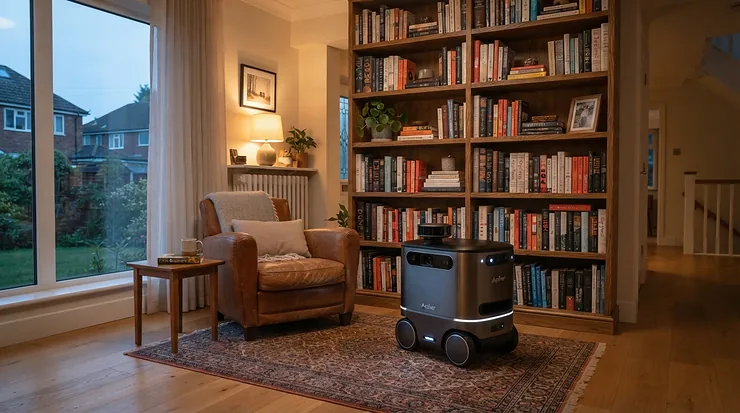
There’s a particular kind of relief that comes from opening a cupboard door and not seeing a robot vacuum’s dustbin sitting there, half-full, waiting for you. That’s the entire promise of a self-emptying robot vacuum base: you get the convenience of automated floor cleaning without the fortnightly ritual of tipping crumbs and pet hair into your kitchen bin. For UK households juggling work, kids, pets and the general chaos of daily life, that’s not a small thing.
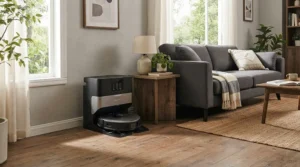
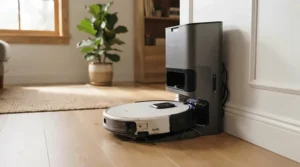
A self-emptying robot vacuum base works by pairing a robot vacuum with a docking station that automatically sucks the contents of the robot’s small onboard bin into a much larger container inside the station itself — usually a sealed bag, sometimes a bagless cyclone chamber. Instead of emptying a robot every couple of days, you might only need to intervene once every four to eight weeks, depending on your home, your pets, and the model you choose.
This guide walks through seven genuinely available self-emptying robot vacuum base models for UK buyers in 2026, spanning honest budget picks through to genuine flagship territory. Along the way we’ll dig into dust bag capacity, dock footprint, robot vacuum dock compatibility, and realistic emptying frequency — the practical details that actually determine whether you’ll be happy with your purchase in six months’ time, not just on unboxing day.
Quick Comparison Table
Before the deep dive, here’s a snapshot of how the seven models stack up on the things that matter most day to day.
| Model | Dock Type | Dust Capacity | Best For |
|---|---|---|---|
| iRobot Roomba Vac 2 Essential | Bagged | ~2.5L bag | First-time buyers on a tight budget |
| Shark PowerDetect RV2820VEUK | Bagless | 1.8L cup | Households wanting no ongoing bag cost |
| Roborock Q Revo Curv | Bagged | 2.5L bag | Compact flats and small-footprint hallways |
| eufy X10 Pro Omni | Bagged | 2.5L bag | Multi-pet or multi-person households |
| Ecovacs Deebot X2 Omni | Bagged | 3L bag | Homes wanting vacuum + handheld in one dock |
| iRobot Roomba Combo 10 Max | Bagged | 3L bag | Buyers fully invested in the iRobot app ecosystem |
| Dreame X40 Ultra Complete | Bagged | 3.2L bag | Large homes wanting maximum suction and reach |
Looking across the table, it’s clear that dust capacity climbs steadily as you move up the price ladder, but the real differentiator is what happens around that bag — mop washing, edge-reaching brushes, and app sophistication. The Shark PowerDetect RV2820VEUK stands out as the only bagless option here, which changes the entire cost-of-ownership conversation compared with its bagged rivals. Meanwhile, buyers with limited hallway space should note that a bigger dust capacity often means a physically taller or deeper base station, so capacity and dock footprint pull in opposite directions.
📊 Prefer to see this laid out visually? Scroll down to the full spec table before you decide — a couple of these numbers might change your shortlist.
Top 7 Self-Emptying Robot Vacuum Bases: Expert Analysis
Robot vacuum technology has genuinely matured. According to testing from Tom’s Guide, which has spent a decade testing robot vacuums, self-emptying for 30 days without intervention has become a realistic benchmark for top-tier models, and the seven picks below reflect that shift — none of them will leave you scrubbing a dustbin every other day.
Here’s the detailed breakdown, sized to help you match a model to your actual home rather than a marketing headline.
1. iRobot Roomba Vac 2 Essential — cheapest genuine self-emptying entry point
The headline here is simple: this is the least expensive route into self-emptying convenience from a recognised brand, and it doesn’t pretend otherwise. Its AutoEmpty Dock handles the basics — suck the bin, seal the bag, get on with your day — without the mapping sophistication of pricier rivals.
Row-by-row cleaning and three suction levels keep the core vacuuming sensible, but there’s no LiDAR or camera-based mapping here, so it navigates by bumping and adjusting rather than building a precise floorplan. What most buyers overlook about entry-level bots like this is that the compromise isn’t really about suction — it’s about efficiency. Without a map, the robot can cover the same patch of floor twice while missing another, which matters more in larger or more complex homes than in a one-bedroom flat.
Reviewer sentiment on this model is candid rather than glowing: testers note the self-emptying and adjustable suction are genuine positives, but flag below-average vacuum performance, a single roller brush design, and no smart mapping capabilities compared with dual-roller, LiDAR-equipped rivals. That’s an honest trade-off, not a hidden flaw.
Pros:
- ✅ Lowest entry price for genuine self-emptying convenience
- ✅ Simple setup with a pre-installed bag and clear instructions
- ✅ Adjustable suction levels for different floor types
Cons:
- ❌ No smart mapping, so coverage can be inconsistent
- ❌ Single roller brush struggles more with tangled pet hair
Typically priced under £300, this is honestly the best value pick for a small flat or a first robot vacuum where you’re not ready to commit £500+ before knowing if the habit sticks.
2. Shark PowerDetect RV2820VEUK — best bagless self-empty base for avoiding bag costs
This is the model to consider if the ongoing cost of dust bags genuinely bothers you. Its bagless Self-Empty base holds up to 60 days of dirt and debris and automatically empties itself after every clean, with a dust capacity of 1.8 litres — no consumable bags to buy, ever.
PowerDetect technology uses three smart sensors — PowerDetect, EdgeDetect and FloorDetect — to detect dirt levels, edges and floor types, automatically adapting suction and cleaning paths. In practice, that means the robot doesn’t blast full power over an already-clean hallway, which helps battery life and noise levels in equal measure. Based on the spec comparison with bagged rivals, the trade-off for going bagless is usually a slightly less airtight seal against dust escaping during emptying — something allergy-conscious households should weigh carefully.
The Anti-Allergen Complete Seal traps 99.9% of dust and allergens inside the base, which somewhat offsets that concern, and the Anti-Hair Wrap Brush Roll picks up pet hair without tangling or losing efficiency — a detail pet owners will appreciate on wash day.
Pros:
- ✅ No recurring dust bag purchases, ever
- ✅ 360° LiDAR navigation for genuinely mapped cleaning
- ✅ Anti-odour cartridge keeps the base smelling fresh
Cons:
- ❌ Bagless emptying can release a small dust puff
- ❌ Base station is bulkier than some bagged rivals
Expect to pay somewhere in the £400-£480 range, making the Shark PowerDetect RV2820VEUK a genuinely strong mid-range value pick, especially for households who resent the idea of buying bags forever.
3. Roborock Q Revo Curv — best for compact UK hallways
British homes tend to have narrower hallways and smaller utility cupboards than their American counterparts, and this is where the Roborock Q Revo Curv earns its place. Its rounded base station measures a modest 35.2cm wide by 34.7cm deep, noticeably more compact than several premium rivals on this list.
The dock uses a dust bag rather than a bagless cyclone, with a 2.7-litre capacity bag able to absorb up to seven weeks of dust while capturing 99.7% of small airborne particles. That’s a genuinely long interval between changes for a mid-range device, and the sealed-bag design means less dust exposure than emptying a bagless cup by hand.
What the spec sheet won’t tell you, but reviewers note, is that the dual-spinning mop system doubles as a reasonably effective scrubber on sealed hard floors, lifting automatically when carpet is detected so you don’t end up with soggy patches on your rug.
Pros:
- ✅ Compact dock footprint suits narrow UK hallways
- ✅ Seven-week bag capacity reduces changing frequency
- ✅ Dual rotating mops for genuine scrubbing action
Cons:
- ❌ Suction is more modest than flagship rivals
- ❌ App can feel cluttered with menus for newcomers
At around £450-£600 depending on which Q Revo variant you land on, this is a sensible middle-ground pick for anyone prioritising a smaller dock over maximum suction numbers.
4. eufy X10 Pro Omni — best all-in-one value for multi-pet households
The eufy X10 Pro Omni has become something of a benchmark for “does everything, costs less than you’d expect.” Its all-in-one station handles vacuuming, mopping, mop-washing and self-emptying in a single unit, and reviewers highlight it as offering extraordinary value: a self-emptying, self-washing dock with AI obstacle avoidance at a price that was unthinkable two years ago.
On the dust side, its dust bin is emptied into the station’s 2.5-litre dust bag, which only needs to be replaced every 2 months, and the mop pads get washed with clean water before being dried with 45°C heated air to prevent bad odour and bacterial growth. Based on the spec comparison against the Roborock and Shark docks above, the eufy sits in a genuinely appealing middle position — wider dust bag interval than the Shark, gentler price than the Ecovacs below.
Independent testing backs up the hygiene angle too: the wider docking station allows the dirtbag inside to accommodate more debris before needing replacement, and its internal dirt compartment scored well against rival Eufy models in side-by-side comparisons. The Auto-Detangling Roller Brush reverses rotation and flips down a comb to loosen hair wrapped around the brush, so you don’t have to.
Pros:
- ✅ Genuine all-in-one hygiene: vacuum, mop wash and dry
- ✅ Auto-detangling brush reduces hair-related maintenance
- ✅ Strong value relative to feature list
Cons:
- ❌ AI object recognition occasionally misses low obstacles
- ❌ App notifications can be overly frequent by default
Typically found around £500-£650, the eufy X10 Pro Omni is our pick for multi-pet or multi-person households wanting the full “does it all” experience without flagship pricing.
5. Ecovacs Deebot X2 Omni — best for dual vacuum-and-handheld auto-emptying
This is the model to know about if you also own a handheld vacuum for stairs, car interiors or sofa crumbs, because the Ecovacs Deebot X2 Omni‘s station empties both. Its two-way Auto-empty function serves both the robotic vacuum cleaner and a handheld vacuum for a genuinely hands-off experience, alongside a 15mm intelligent auto-lifting mop and auto mop washing with 60°C hot water.
Dust capacity is generous: the dust bag capacity is 3 litres, and separately, users have reported bag longevity of up to 90 days between changes on similar X2 Omni configurations — though real-world mileage naturally varies with pet hair volume and floor type. Here’s what to weigh: the dual-emptying feature is genuinely clever, but it does mean the base station itself is larger than single-purpose rivals, since it has to house two separate collection paths.
Vacuum suction tops out at 8,700Pa, comfortably mid-pack for this price bracket, and the 4-litre clean water tank supports mopping areas up to 400 square metres before needing a refill — useful for larger UK homes with multiple reception rooms.
Pros:
- ✅ Empties both robot and handheld vacuum automatically
- ✅ Large 3L bag with long intervals between changes
- ✅ Strong mopping area coverage per water tank fill
Cons:
- ❌ Larger dock footprint due to dual-empty design
- ❌ Premium pricing reflects the added handheld feature
Priced roughly £700-£900, this suits households who genuinely use a handheld vacuum regularly and want to stop thinking about either device’s maintenance entirely.
6. iRobot Roomba Combo 10 Max — best for households already inside the iRobot ecosystem
The iRobot Roomba Combo 10 Max arrives with an AutoWash Dock that reviewers describe as taking care of “all imaginable and unimaginable tasks,” designed to powerfully vacuum and mop floors, automatically empty collected dust and dirt into a sealed bag, and clean its mopping pad. That’s the full hands-off promise, and iRobot’s execution is polished if familiar to anyone who has owned a Roomba before.
Base station dust capacity sits at 3 litres, with the robot’s own onboard bin at a smaller 0.31 litres, meaning frequent trips back to the dock — which is precisely the point of a self-emptying system. SmartScrub technology genuinely earns its name here: the robot vacuum thoroughly mops floors and automatically lifts its mop when it detects carpet, allowing it to evade objects without leaving damp streaks on rugs.
Real owner feedback is mixed on one specific point worth flagging honestly: testers report drying the mopping pad takes a lot of time and makes a lot of noise, even while praising overall cleaning quality on both hard floors and deep-pile carpet. Reviewers consistently note that the setup process, while smooth via the app, would benefit from a printed manual for less technical users.
Pros:
- ✅ Polished, mature app experience within iRobot OS
- ✅ Effective on both hard floors and deep-pile carpet
- ✅ SmartScrub mopping avoids wetting carpeted areas
Cons:
- ❌ Mop-pad drying cycle is notably loud
- ❌ Base station is one of the larger footprints here
Typically sitting around £900-£1,100 (watch for periodic discounting), this is the pick for households already comfortable with iRobot’s app and happy to pay for brand maturity over raw spec-sheet numbers.
7. Dreame X40 Ultra Complete — best for maximum suction and reach in larger homes
At the top of this list sits the Dreame X40 Ultra Complete, built around genuinely class-leading suction and an extendable side brush designed to reach into corners a standard robot vacuum simply can’t. SideReach technology reaches typically unreachable areas, while MopExtend RoboSwing ensures thorough mopping and an RGB sensor detects dirt level automatically.
On paper this means serious cleaning capability: 12,000Pa suction eliminates hair, dirt and debris for a cleaner home, while a removable mop protects carpets from moisture during vacuum-only passes. The dock itself carries a 3.2-litre dust bag capacity alongside a 4.5-litre clean water tank — genuinely capacious numbers that suit larger family homes with more floor area to cover between cleaning cycles.
Independent review testing tempers the enthusiasm slightly, though, and it’s worth passing on honestly: the suction on the auto-empty station itself is a bit weak, meaning bags may need changing more often than the headline capacity suggests, and running costs on replacement bags can add up. The same review does note pet faeces detection that genuinely works, avoiding smeared accidents rather than driving through them, alongside excellent mapping and obstacle avoidance overall.
Pros:
- ✅ Class-leading 12,000Pa suction power
- ✅ Extendable side brush reaches tight corners
- ✅ Pet mess detection avoids smearing accidents
Cons:
- ❌ Auto-empty suction weaker than expected for the price
- ❌ Running costs on bags can climb faster than rivals
Typically priced £900-£1,300 at full RRP, though warehouse-style retailers occasionally discount it considerably — this is the pick for larger homes prepared to pay flagship money for flagship reach and suction.
Practical Usage Guide: Setting Up and Maintaining Your Self-Emptying Base
Getting a new self-emptying robot vacuum base right in the first month makes an enormous difference to how much you actually enjoy owning it. Start by placing the dock against a flat wall with at least 50cm of clear space on either side and roughly 1.5 metres in front — most docks need that runway to line the robot up for a clean re-entry, and a cramped corner is the single most common cause of failed docking in the first fortnight.
During setup, resist the urge to skip the initial mapping run. Letting the robot complete one uninterrupted lap of your home before you start editing no-go zones means the resulting map is genuinely accurate, rather than a rough guess stitched together from partial passes. A common mistake in the first 30 days is dismissing low-battery return trips as a fault, when actually the robot is simply learning your floorplan and being cautious.
On maintenance: wipe the dock’s charging contacts weekly with a dry cloth — a surprising number of “my robot won’t charge” complaints trace back to nothing more than dust bridging the contacts. Check the dust bag or bin roughly once a month even if the indicator hasn’t flagged it as full, since a partially blocked bag reduces suction efficiency well before it triggers a warning. Finally, wash reusable filters (where fitted) every fortnight under cold running water and let them air-dry completely before reinstalling — a damp filter is a genuine mould risk inside a warm, enclosed dock.
Real-World Scenarios: Which Self-Emptying Base Suits Your Home?
The busy family with two dogs in a three-bedroom semi. With daily shedding and muddy paw prints tracking through the hallway, a large dust capacity and genuine mop-washing matter more than anything else. The eufy X10 Pro Omni or Ecovacs Deebot X2 Omni fit this brief well — both offer generous bag intervals and proper hot-water mop cleaning that copes with regular mess.
The young professional in a one-bedroom London flat. Space is the binding constraint here, not budget. A compact dock footprint matters more than maximum suction, which makes the Roborock Q Revo Curv or even the iRobot Roomba Vac 2 Essential sensible choices — both tuck into a small utility cupboard without dominating the room.
The retired couple in a large detached house with hard floors throughout. Coverage area and reach into corners around furniture legs become the priority, alongside minimal ongoing fuss. The Dreame X40 Ultra Complete‘s extendable side brush and large water tank suit sprawling floor plans, while its higher price is offset by fewer manual interventions across a bigger space.
How to Choose a Self-Emptying Robot Vacuum Base?
A self-emptying robot vacuum base is a docking station that automatically transfers debris from a robot vacuum’s small internal bin into a larger container, reducing manual emptying to once every few weeks rather than every few days. Choosing the right one comes down to a handful of practical questions rather than marketing buzzwords.
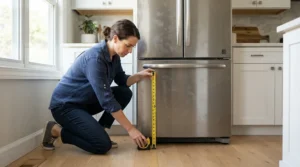
- Measure your available space first. Note the width, depth and height available before shortlisting anything — a stunning flagship dock is useless if it doesn’t fit your hallway alcove.
- Decide bagged versus bagless. Bagged docks tend to seal dust more hygienically but carry ongoing costs; bagless docks save money long-term but need more careful emptying.
- Match dust capacity to your household. Pet owners and larger families should prioritise 2.5 litres or more; single occupants in smaller flats can comfortably manage with less.
- Check robot vacuum dock compatibility. Confirm the specific robot model is genuinely designed to pair with that exact dock — cross-brand pairing rarely works.
- Consider mop-washing if you have hard floors. Not every self-emptying dock also washes mop pads; if you mop regularly, this feature saves real time.
- Weigh noise tolerance. Emptying cycles can be genuinely loud for 10-15 seconds; if you work from home, check reviewed noise levels before buying.
- Factor in realistic running costs. Add up a year of replacement bags or filters, not just the sticker price, before comparing models.
According to the consumer group Which?, which has tested popular robot vacuums from Dyson, Eufy, Samsung and Shark against crumbs, pet hair and furniture to see how they handle real household mess, the gap between marketing claims and real-world performance can be significant — which is exactly why independent hands-on testing matters more than spec sheets alone.
Self-Emptying Dock Robot Vacuum Compatibility Explained
One of the most frequent questions we see is whether a self-emptying dock can be bought separately and paired with an existing robot vacuum. In almost every case, the answer is no — these docks are engineered as matched pairs with the specific robot model they ship with, right down to the shape of the dust-transfer port and the electrical contacts. A Roborock Q Revo Curv dock, for instance, will not empty a Shark PowerDetect robot, and vice versa.
Where genuine compatibility flexibility exists, it’s usually within a manufacturer’s own product family — some Ecovacs and Roborock docks are designed to accept two or three closely related robot generations, which is worth checking if you’re upgrading a robot but hoping to reuse an existing base station. Always check the manufacturer’s compatibility list by model number before assuming a dock will work, since even visually similar robots from the same brand can differ internally.
Dust Bag Capacity: What the Litres Actually Mean
Dust bag capacity numbers range from around 1.8 litres in bagless cup designs up to 3.2 litres in the largest bagged flagship docks on this list, but the raw litre figure only tells part of the story. A 3-litre bag in a home with two long-haired dogs will fill considerably faster than the same bag in a childless flat with laminate flooring throughout, because volume fills up faster with bulky pet hair than with fine dust.
This matters particularly for households managing allergies. According to NHS guidance from Cambridge University Hospitals, house dust mites live throughout the home and their droppings become airborne, triggering allergic reactions in sensitive individuals — which is exactly why a sealed, high-capacity bag that’s emptied without direct hand contact offers a genuine hygiene advantage over manually emptying a small bagless bin every couple of days. If allergies are a household concern, prioritise bagged systems with a stated antibacterial or sealed-bag design, such as the eufy X10 Pro Omni or Ecovacs Deebot X2 Omni, over pure bagless cup designs.
| Model | Stated Dust Capacity | Container Type |
|---|---|---|
| Shark PowerDetect RV2820VEUK | 1.8L | Bagless cup |
| iRobot Roomba Vac 2 Essential | ~2.5L | Sealed bag |
| Roborock Q Revo Curv | 2.7L | Sealed bag |
| eufy X10 Pro Omni | 2.5L | Sealed bag |
| iRobot Roomba Combo 10 Max | 3L | Sealed bag |
| Ecovacs Deebot X2 Omni | 3L | Sealed bag |
| Dreame X40 Ultra Complete | 3.2L | Sealed bag |
Reading this table, it’s worth noting that raw capacity climbs almost in lockstep with price, but the Shark PowerDetect‘s bagless design means its smaller 1.8-litre figure isn’t directly comparable to the bagged competitors — a bagless cup can be emptied and reused indefinitely, while a full bag simply gets replaced. For allergy-conscious households, the sealed-bag options generally offer more peace of mind despite the extra ongoing cost.
Dock Footprint: Why Base Size Matters in British Homes
British homes tend to be smaller, on average, than their American, Australian or continental European counterparts, which makes physical dock footprint a genuinely underrated buying criterion. A dock designed with a spacious American mudroom in mind can feel enormous parked against a narrow UK hallway wall, particularly once you account for the clearance space the robot needs to approach and reverse into it.
Among the models covered here, the Roborock Q Revo Curv and eufy X10 Pro Omni both keep their footprints relatively contained, while the iRobot Roomba Combo 10 Max and Dreame X40 Ultra Complete trend larger, partly as a function of their bigger dust and water tank capacities. Before buying, measure the exact width and depth of your intended spot, then compare against the manufacturer’s stated dock dimensions rather than assuming “compact” marketing language translates to a specific number of centimetres.
Emptying Frequency: How Often You’ll Actually Need to Intervene
For a typical two-to-three-bedroom UK home without pets, most of the docks on this list need genuine manual emptying only every six to eight weeks under normal use. Add one or two pets into the mix, and that interval tightens noticeably — expect closer to every three to four weeks, since pet hair and dander fill bag volume far faster than ordinary household dust.
Reviewers consistently note that manufacturer-stated intervals (sometimes quoted as 60 or even 90 days) assume relatively light, dust-only debris loads. In real homes with carpets, pets, or several occupants, halving that stated figure is a more realistic planning assumption. If minimising interventions matters most to you, prioritise the higher-capacity bagged options — the Dreame X40 Ultra Complete and Ecovacs Deebot X2 Omni — over smaller-capacity bagless designs.
Auto-Empty Base Buying Guide: Common Mistakes to Avoid
The single most common mistake is buying based on suction power (Pa) alone while ignoring dock footprint and bag capacity entirely — a vacuum that cleans brilliantly but needs emptying every ten days defeats much of the point of “self-emptying” in the first place. A close second is assuming all self-emptying docks also wash mop pads; several genuinely just empty dust and do nothing for mopping maintenance, so always check that specific feature line rather than assuming it’s bundled in.
Buyers also frequently underestimate ongoing bag costs, comparing only sticker prices without factoring in a year or two of replacement bags — which, across models like the Dreame X40 Ultra Complete, can add up meaningfully given its reported higher bag-change frequency. Finally, don’t skip checking noise specifications if you work from home or have a nursery nearby; a 10-15 second emptying cycle at 80+ decibels, several times a day, is noticeable in a small flat.
Self-Emptying vs Traditional Robot Vacuums
| Factor | Self-Emptying Base | Traditional Robot Vacuum |
|---|---|---|
| Manual emptying frequency | Every 3-8 weeks | Every 1-3 days |
| Upfront cost | Higher | Lower |
| Ongoing running cost | Bags/filters (bagged models) | None beyond filters |
| Best For | Busy households, allergy sufferers | Occasional users, tight budgets |
The gap in day-to-day convenience here is substantial: a traditional robot vacuum without a self-emptying dock genuinely does need attention every couple of days once you have pets or a family of four in the house, which for many buyers erodes much of the “set and forget” appeal robot vacuums are supposed to offer. That said, traditional models remain a sensible choice for single-occupant flats with minimal dust and no pets, where the emptying burden is genuinely light and the extra £150-£300 for a self-emptying dock is harder to justify.
Long-Term Cost & Maintenance
Total cost of ownership on a self-emptying robot vacuum base extends well beyond the sticker price, and it’s worth doing this maths honestly before committing. Bagged systems typically cost £15-£25 for a pack of six bags, lasting anywhere from three to eight months depending on household mess levels, which works out to roughly £30-£50 a year in consumables. Bagless systems like the Shark PowerDetect RV2820VEUK avoid that entirely, though replacement filters (typically £15-£25 every six to twelve months) still apply.
Mop pads, side brushes and main brush rolls also wear out on a predictable cycle — usually every four to six months for pads and brushes, and once a year for the main roller on higher-use households. Budgeting an extra £40-£60 annually for these consumables, across any of the seven models here, gives a realistic total ownership picture rather than just the headline purchase price.
Problem → Solution: Fixing Common Self-Emptying Base Issues
Problem: The robot keeps missing the dock and failing to empty. This is almost always a positioning issue rather than a fault. Solution: clear at least 1.5 metres of straight approach space in front of the dock and remove any reflective surfaces nearby that can confuse infrared sensors.
Problem: Dust bag fills up far faster than the stated interval. This typically means pet hair or larger debris is compacting the bag inefficiently. Solution: increase cleaning frequency slightly so less debris accumulates per session, reducing clumping inside the bag.
Problem: The base station smells musty after a few months. Usually caused by moisture trapped in a mop-washing dock that isn’t fully drying. Solution: run an extra drying cycle manually once a fortnight and leave the dock’s access panel open for an hour after each mop wash.
Problem: An “empty bin” error appears even with a fresh bag installed. Often a sensor calibration issue rather than a genuine blockage. Solution: remove and reseat the bag firmly, checking it clicks into its guide slots properly — a loosely seated bag frequently triggers false errors.
Old bases and worn-out consumable parts shouldn’t simply go in general household rubbish once they’re beyond repair. Under WEEE regulations, anything with a plug, battery or charging function needs separating out — as one UK council explains, any small electrical or electronic item with a plug, battery, or cable can be recycled at dedicated electrical recycling points, and where possible batteries should be removed before recycling. Most local recycling centres accept a full dock unit without issue.
Frequently Asked Questions
❓ Do all robot vacuums have a self-emptying base?
❓ How often do you need to empty a self-emptying robot vacuum base?
❓ Are bagless self-emptying bases better than bagged ones?
❓ Can I use a different brand's dock with my existing robot vacuum?
❓ Is a self-emptying robot vacuum base worth the extra cost?
Conclusion
Choosing the right self-emptying robot vacuum base really does come down to matching the model to your actual home rather than chasing the highest suction number on a spec sheet. Budget-conscious first-time buyers will get on well with the iRobot Roomba Vac 2 Essential, while anyone wanting to escape ongoing bag costs entirely should look hard at the Shark PowerDetect RV2820VEUK. Compact UK flats suit the Roborock Q Revo Curv, multi-pet households get excellent value from the eufy X10 Pro Omni, and those wanting a dual vacuum-and-handheld solution should consider the Ecovacs Deebot X2 Omni.
At the premium end, the iRobot Roomba Combo 10 Max rewards existing iRobot users with a mature, polished app experience, while the Dreame X40 Ultra Complete delivers genuinely class-leading suction and reach for larger homes prepared to pay flagship prices. Whichever you choose, remember that dust bag capacity, dock footprint and realistic emptying frequency matter just as much as the headline suction figure — and now you have the real numbers to compare them properly.
✨ Ready to reclaim your weekends from vacuum duty?
🏠 Check current prices on today’s picks and find the self-emptying base that fits your home, your budget, and your floors.
Recommended for You
- Robot Vacuum Mop Combo vs Separate Mop: 7 Best Picks UK 2026
- Robot Vacuum Mop Combo Reviews: 7 Best Picks For UK Homes (2026)
- Robot Vacuum Mop For Large Homes: 7 Best Picks (2026)
Disclaimer: This article contains affiliate links. As an Amazon Associate, I earn from qualifying purchases. If you purchase products through these links, we may earn a small commission at no additional cost to you.
✨ Found this helpful? Share it with your friends! 💬🤗
