In This Article
Nobody puts the bag on the box. Retailers shout about 10,000Pa suction and mop-lifting arms, and they say very little about the sealed paper-and-plastic pouch hiding inside the dock. That pouch is a subscription you never signed up for. Every few weeks it fills, and every few weeks you pay for the next one.

The self-emptying robot vacuum bag replacement cost is small per bag and awkward in aggregate. One retail guide suggests OEM bags run roughly $3–$5 each, which works out at $15–$30 a year. A UK test site put its own full running cost, bags and filters together, at around £42 a year. Neither figure will ruin you. Both are worth knowing before you choose between a bagged dock and a bagless one.
The harder problem is sourcing. Some bags are easy to find. Others are proprietary, sold through “select retailers” only, or out of stock when you need them. A robot is a hands-free appliance only while the consumable is in the cupboard.
This guide covers what a typical bag costs, how often you’ll swap it, and where the savings are. It also covers whether generic bags are worth the gamble. If you want the background on how these machines work, Wikipedia’s overview of robotic vacuum cleaners is a decent primer. Everything below is built around the real bill, in pounds, for a British home.
Self-Emptying Robot Vacuum Bag Replacement Cost at a Glance
Here’s the short version before the detail. Prices are ranges based on retail listings at the time of research. Always check the current price, because it moves.
| Model | Dock bag (as researched) | Typical cost per bag | Best For |
|---|---|---|---|
| eufy L60 with Self-Empty Station | Six-bag packs sold direct | Roughly £3–£4 | Budget buyers who want packs in stock |
| Dreame L10s Ultra Gen 2 | 3.2L bag, up to 65 days claimed | Roughly £4–£6 | Long gaps between bag changes |
| Roborock Q7 Max+ | 2.5L bag, up to 7 weeks claimed | Roughly £3–£5 | Easy-to-find, widely cloned bags |
| iRobot Roomba j7+ | Three-bag packs, around 30 bins per bag | Roughly £5–£6 | Brand loyalists who accept a premium |
| Lubluelu L20Max | Large bag, price unverified | Unknown, check listing | Bargain hunters who accept sourcing risk |
| Roborock S8 MaxV Ultra | 2.7L bag (code SDCD05RR) | Roughly £1.50–£4 (generic vs OEM) | Premium buyers with plenty of generic choice |
| Tapo RV30 Max Plus | 45-day disposable bag | Unverified, check listing | Simple, no-frills self-emptying |
The pattern is clear. Cheaper robots don’t always have cheaper bags. The Roborock S8 MaxV Ultra costs far more than the Lubluelu L20Max, yet its bag ecosystem is probably the easiest and cheapest to feed. For the iRobot Roomba j7+, you pay for a brand name and a very predictable fit. For the Lubluelu L20Max, the headline price is attractive and the bag price is a question mark.
💬 Just one click — help others make better buying decisions too!😊
What Is Self-Emptying Robot Vacuum Bag Replacement Cost?
Self-emptying robot vacuum bag replacement cost is the recurring spend on the disposable dust bags inside a robot vacuum’s docking station. Each time the robot returns to its dock, a burst of air pulls debris from the small onboard bin into this larger sealed bag. You replace the bag when it fills, typically every few weeks to a couple of months, depending on the model and your home.
That definition hides three separate costs:
- The bag itself. Brand bags sold in packs of three or six generally cost a few pounds each.
- The frequency. Manufacturers quote anything from about 45 to 75 days, but a pet-owning household can fill a bag far faster.
- The ripple costs. Filters, brushes and a clogged dock if you ignore a full bag.
That last one matters. iRobot’s own listing warns that full bags can clog the dock and stop the robot from emptying. So the real price of neglect isn’t just a wasted bag. It’s the cost of a dock that stops working properly.
Bagless docks sidestep this entirely, which is why they’re covered in a dedicated comparison later. For now, hold onto the idea that the bag price is only one line on the bill.
Top 7 Self-Emptying Robot Vacuums: Expert Analysis of Bag Costs
These seven models cover budget, mid-range and premium. For each one I’ve focused on what its bag situation means in practice rather than reciting a spec sheet.
1. eufy L60 with Self-Empty Station — bags sold direct in six-packs
The eufy L60 with Self-Empty Station has the clearest bag-buying story in this list. Eufy’s UK store lists a pack of six genuine replacement dustbags at around £20, and it sells bundles that include six bags with the robot.
The bundle is revealing. The L60 with Self-Empty Station and six bags sits only about £20 above the robot on its own. In other words, the bundle prices a half-year or more of bags at roughly the standard pack price. That makes the bundle the sensible way to buy if you’re ordering the robot anyway.
On paper, a cost of roughly £3–£4 per bag is competitive. It’s aimed at buyers who want a capable machine without a premium-brand bag bill.
Reviewer sentiment needs careful framing. On eufy’s US store, several buyers complained about struggling to find compatible refills and about the box including only a single bag. The UK store now lists packs directly, which suggests the supply problem has eased here, but check stock before you rely on it.
Pros:
- ✅ Six-bag packs sold direct by the manufacturer
- ✅ Bundle option bakes in a half-year of bags
- ✅ Competitive cost per bag
Cons:
- ❌ Supply complaints appear in US reviews
- ❌ Box reportedly includes only one bag
The robot sits in the £350–£400 range, with packs at around £20 for six. Value verdict: strong, provided you buy the bundle.

2. Dreame L10s Ultra Gen 2 — longest claimed gap between bag changes
The Dreame L10s Ultra Gen 2 pairs a 3.2L dock bag with a claimed interval of up to 65 days, and one UK retailer’s listing goes as far as 75 days of auto-emptying. Bigger bag, fewer swaps.
Those day counts are manufacturer lab figures, and Dreame says so itself. Treat 65 days as a best case. In a home with a long-haired dog, expect to change it more often.
The analytical point is that a roomier bag cuts your annual bag count even if each bag costs a little more. If you value fewer chores, that trade-off is worth it. Dreame’s own 3-pack of compatible bags was listed in the US in the high-teens in dollars, which suggests roughly £4–£6 per bag here, but verify UK pricing before you budget.
Reviewer evidence is thin. The US bag listing carries only a handful of reviews, all positive but too few to draw conclusions. One UK test site also noted that bags for this kind of system can be sold through select retailers only, so sourcing may take effort.
Pros:
- ✅ Large 3.2L bag capacity
- ✅ Long claimed interval between changes
- ✅ Bundled accessory kits available
Cons:
- ❌ Sourcing may be limited to select retailers
- ❌ Claimed intervals are lab-based best cases
The robot sits in roughly the £450–£700 range depending on retailer. Value verdict: good for low-maintenance households, assuming you can source bags easily.
3. Roborock Q7 Max+ — the most widely cloned bag
The Roborock Q7 Max+ uses a 2.5L disposable dock bag that Roborock says holds up to seven weeks of debris. It also uses the same bag family as several other Roborock docks, which is the real win.
When a bag fits several models, third-party makers produce it in volume. That means competition and, in turn, lower prices. The bag itself uses a two-layer filter design that Roborock says captures 99.97% of particles down to 0.3 microns. Treat that as a manufacturer claim rather than independent evidence.
Pricing from European retailers puts a six-pack of genuine 2.5L bags in the mid-£20s, and three-packs of older-dock bags lower than that. That’s roughly £3–£5 per bag. Annual cost for a typical household lands around £20–£30.
On reviews, I could verify very little for this specific bag in the UK. Marketplace listings for compatible alternatives showed no reviews at all at the time of research, so treat generic quality as unproven rather than good or bad.
Pros:
- ✅ Bag fits multiple Roborock docks
- ✅ Seven-week claimed capacity
- ✅ Competitive genuine pricing
Cons:
- ❌ Verified UK review data is thin
- ❌ Compatibility varies between dock generations
The robot sits in the mid-range bracket; check current prices. Value verdict: very good if bag availability is your priority.
4. iRobot Roomba j7+ — premium-priced bags, predictable fit
The iRobot Roomba j7+ is one of the self-emptying models Which? has reviewed, and its Clean Base takes iRobot’s own bags in three-packs, listed at €19.99 on iRobot’s European stores. Each bag holds around 30 bins of debris.
That’s roughly £5–£6 a bag, the highest in this group. You’re paying for a brand-matched fit, and iRobot’s own listing leans hard on the idea of genuine parts. Whether non-genuine alternatives cut corners is a claim from iRobot itself, so weigh it accordingly.
The bags are widely sold, and a six-month supply from a three-pack is the rough maths. The brand’s long history also means plenty of generic competitors, which brings the real cost down if you’re comfortable with them.
Review evidence is mixed in a useful way. iRobot’s listing shows a perfect rating, though that doesn’t tell you how large the sample is. Elsewhere, one shopper on a Canadian retailer page said they struggled to find bags, which shows availability can vary by region.
Pros:
- ✅ Predictable genuine fit
- ✅ Long track record and wide generic choice
- ✅ Three-bag packs last around six months
Cons:
- ❌ Highest genuine cost per bag here
- ❌ Regional availability varies
Bags sit around £17–£20 for three. Value verdict: fair, and much better if you accept a good generic.
5. Lubluelu L20Max — bargain robot, mystery bag bill
The Lubluelu L20Max appeared on a UK deals site in 2026 at around £80 with a voucher code, with a self-emptying station and a large-capacity bag. That headline price is the whole appeal.
Here’s the honest bit: I couldn’t verify the replacement bag price or a reliable UK source for it. The deal page’s own comment thread asked whether the dust bag was reusable, which tells you buyers had questions about the bag situation. The same thread included an approving remark about the price for a self-emptier.
The analytical point is simple. At this price, the robot is almost a consumable itself, so the bag only makes sense if it’s cheap and easy to get. Check that before you buy, not after.
Because the item shipped through an overseas marketplace, customs duty could apply on items shipped outside the UK costing more than £135, as the deal listing noted. That’s unlikely for a robot at this price, but it matters for bundles.
Pros:
- ✅ Very low entry price
- ✅ Self-emptying station included
- ✅ LiDAR mapping at this price
Cons:
- ❌ Replacement bag pricing unverified
- ❌ Overseas marketplace sourcing
The robot sat under £100 during the promotion; check the current price. Value verdict: risky unless you’ve confirmed the bag supply.

6. Roborock S8 MaxV Ultra — premium robot with the deepest generic choice
The Roborock S8 MaxV Ultra uses a bag Roborock lists under the code SDCD05RR, with a capacity of around 2.7L. This is the same bag used across the newer Qrevo and Saros families, so the ecosystem is large.
That scale is the story. Third-party sellers list six-packs of compatible bags specifically referencing that OEM code, with an approximate 2.7L capacity and a self-sealing closure. One such six-pack listed for the equivalent of well under £10, which implies something like £1.50 a bag.
So genuine bags might cost about £3–£4 each, while generics can cost under half that. Over a year, the difference is perhaps £10–£15. It’s not a fortune, but it’s real.
I couldn’t find independent review data on the generic bags themselves. One marketplace listing showed zero reviews at the time of research, so quality remains your risk.
Pros:
- ✅ Large 2.7L bag
- ✅ Deepest generic ecosystem
- ✅ Self-sealing bag design
Cons:
- ❌ Generic quality unverified
- ❌ High upfront robot cost
The robot sits in the premium bracket, so check current prices. Value verdict: excellent bag economics, but you’re mostly paying for the robot.
7. Tapo RV30 Max Plus — simple self-emptying, 45-day bag
The Tapo RV30 Max Plus is the plain-spoken option. One 2026 guide described it as a basic self-empty station with a 45-day disposable bag, at around $229, which was the budget end of the list.
A 45-day bag means roughly eight swaps a year, the shortest interval here. If bags cost £3–£4, that’s around £25–£35 annually, which is fair for the price.
The analytical takeaway is that a cheap robot with a short bag interval still comes out sensible, provided bags are cheap. I couldn’t verify the UK bag price or availability, so check before buying.
I also couldn’t find verified review data on this model’s bags, so treat any bag claim as unconfirmed.
Pros:
- ✅ Straightforward self-emptying dock
- ✅ Budget-friendly entry
- ✅ 45-day claimed bag life
Cons:
- ❌ Shortest claimed interval here
- ❌ Bag pricing unverified
Expect the robot in the budget-to-mid bracket. Value verdict: good, assuming the bag price is reasonable.
Top 7 Compared: Bag Pack Pricing and Annual Costs
| Model | Est. cost per bag | Est. bags per year | Est. annual bag cost | Best For |
|---|---|---|---|---|
| eufy L60 with Self-Empty Station | £3–£4 | 6–8 | £18–£32 | Budget-conscious buyers |
| Dreame L10s Ultra Gen 2 | £4–£6 | 5–6 | £20–£36 | Low-maintenance households |
| Roborock Q7 Max+ | £3–£5 | 7–8 | £21–£40 | Easy bag sourcing |
| iRobot Roomba j7+ | £5–£6 | 6 | £30–£36 | Genuine-part purists |
| Roborock S8 MaxV Ultra | £1.50–£4 | 6–7 | £9–£28 | Generic-friendly premium buyers |
| Lubluelu L20Max | Unverified | Unverified | Unverified | Confirm before buying |
| Tapo RV30 Max Plus | Unverified | 8 | Unverified | Basic self-emptying |
These annual figures are my own arithmetic from retail pack prices and manufacturers’ claimed intervals, so treat them as estimates. The spread is narrow, with most genuine-bag setups landing between roughly £20 and £40 a year. That’s consistent with the £42 full running cost one UK test site reported once filters were included.
The practical conclusion is that bag cost alone rarely decides the purchase. Availability, interval and generic choice matter more. Buyers who value predictability will favour the iRobot Roomba j7+, while those chasing the lowest bill should look at the Roborock S8 MaxV Ultra with a trusted generic.
How to Choose a Self-Emptying Robot Vacuum Based on Bag Costs
Which? says robot vacuums range from around £200 to more than £1,000, so the dock’s consumables are a modest line on a much larger purchase. Even so, a few minutes of checking now saves irritation later. For a wider buying guide, Which?’s robot vacuum reviews are worth a look.
- Check the bag exists in the UK. Search for the exact bag before the robot. If you can’t find it in stock, that tells you something.
- Work out cost per bag, not per pack. A six-pack at £20 and a three-pack at £18 are very different deals.
- Compare claimed intervals. A 65-day bag at £5 can be cheaper over a year than a 45-day bag at £3.
- Look for generic choice. Popular docks attract third-party bags, which pushes prices down.
- Consider bundles. Some retailers sell robots with six bags included, which can beat buying separately.
- Be honest about your home. Pets, long hair and big carpets shorten every interval.
- Weigh bagless. If you hate consumables, a bagless dock may suit you better.
The common thread is realism. Manufacturer intervals come from lab conditions, and your home won’t match them.
Robot Vacuum Bag Price: What You’ll Actually Pay
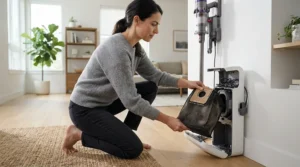
Robot vacuum bag price varies less than you might expect and more than you’d like. Genuine bags generally cost a few pounds each, usually sold in packs of three or six. Drop below that and you’re probably looking at generics.
One retail guide noted that third-party replacement bags have flooded the market at around half the price of OEM options. That squares with the marketplace listings above, where a generic six-pack priced at the equivalent of under £10 competes with genuine six-packs in the £20s.
Several things push the price up:
- Proprietary shapes. Unusual bag designs reduce generic competition.
- Scarcity. Bags sold through select retailers only cost more and arrive slower.
- Bundling. Accessory kits that include bags can look pricey but include brushes and filters.
Price per bag is also not the same as price per week. A pricier bag with a longer interval can be the cheaper option. Always divide by the claimed days, then adjust for your home.
Don’t assume the lowest sticker is the best deal. A cheap bag that doesn’t seal properly can leak dust into the dock, which costs more in cleaning time than you saved.
Self-Emptying Base Running Costs: The Full Annual Picture
Self-emptying base running costs are more than bags. A fair annual estimate also includes filters, side brushes and sometimes mop pads. Here’s a sensible way to think about it.
| Scenario | Bags per year | Bag cost | Filters and brushes | Rough annual total |
|---|---|---|---|---|
| Small flat, no pets | 5–6 | £15–£25 | £10–£20 | £25–£45 |
| Family home, mixed floors | 7–8 | £25–£40 | £15–£30 | £40–£70 |
| Pet household, heavy shedding | 9–12 | £30–£60 | £20–£40 | £50–£100 |
These are my own illustrative estimates, built from the pack prices and intervals above. They’re not measured results.
The table shows how sharply household type changes the bill. A pet household can pay double what a small flat pays. If you’re in the heavy-shedding bracket, a bagless dock or a generic-friendly model such as the Roborock S8 MaxV Ultra starts to look more attractive.
Electricity is a minor extra. The dock draws power in short bursts, and the cost is trivial compared with consumables. The bigger running cost is usually your time, which is why bag availability matters.
One honest caveat: these totals exclude replacement robots. A well-maintained robot lasts years, but batteries eventually fade.
How Often to Replace Robot Vacuum Bags
How often to replace robot vacuum bags depends on the model, your home and how you run the robot. Manufacturers quote intervals that sound generous. The Roborock Q7 Max+ is claimed at up to seven weeks, the Dreame L10s Ultra Gen 2 at up to 65 days, and the Tapo RV30 Max Plus at 45 days.
Treat those as ceilings. iRobot’s bags are described as holding around 30 bins, so the interval depends on how much each run picks up. In a tidy flat, that could be two months. In a house with a shedding dog, it could be three weeks.
A sensible rule is to check rather than guess:
- Use the app reminder. Many brands, Dreame included, send a dust-collection reminder.
- Replace when it feels full. Don’t wait for suction to drop.
- Never overfill. iRobot warns that full bags can clog the dock and stop emptying.
If emptying sounds weaker or the robot returns with debris still in its bin, change the bag. A bag that’s merely fairly full costs you pennies to replace. A clogged dock costs far more.
A good habit is to note the date on the new bag with a marker. After two changes, you’ll know your own interval, which beats any manufacturer figure.
Bag Pack Pricing: Is the Bulk Pack Worth It?
Bag pack pricing usually rewards buying in bulk, but only up to a point. Packs come in threes and sixes, and the six-pack is almost always the lower cost per bag. Eufy’s UK six-pack, at around £20, is a good example.
The maths is simple. A six-pack at £20 is roughly £3.30 a bag. A three-pack at £12–£13 is roughly £4 a bag, so the larger pack saves about 20 per cent. Those are indicative figures, so check current listings.
Still, a bulk pack only makes sense if you’ll use it. Bags don’t spoil quickly, but you might switch robot models before you finish a six-pack. A pack of bags for a retired dock is a small, silly loss.
Bundles are worth a look. The eufy L60 with Self-Empty Station is sold alongside a version with six bags included, and the price gap is close to the standalone pack price. Similarly, accessory kits that bundle bags with filters and brushes can represent decent value, though only if you need all of it.
A sensible rule: buy the six-pack if you’ve owned the robot for a few months and know your interval. If you’re brand new, a three-pack is a safer first purchase.
Subscription Bag Delivery: Does It Exist, and Is It Worth It?
Subscription bag delivery is a tempting idea for a recurring cost. In practice, I couldn’t verify a manufacturer-run bag subscription from the brands covered here at the time of research. What exists instead is bundling, multi-packs and retailer-level options.
Amazon’s Subscribe & Save feature may be available on some listings, but eligibility varies by product, so check the individual listing rather than assuming. Don’t expect a discount to be guaranteed.
Subscriptions have a real logic only when your interval is stable. If you change a bag every seven weeks like clockwork, a regular delivery saves you remembering. If your interval swings with the seasons, you’ll either run out or stockpile.
My view is that a good six-pack beats a rigid subscription for most households. A six-pack typically covers around six months, which is about as frequent a reorder as most people want. Set a phone reminder instead.
If you do use a subscription, watch for compatibility changes. Dock generations differ, and an automatic delivery of the wrong bag is a nuisance.
Generic vs Branded Bags: Savings, Risks and Real Trade-Offs
Generic vs branded bags is the biggest lever on your running costs. A generic six-pack can cost half of a genuine one, and for popular docks the choice is huge.
The case for generics is straightforward. One guide noted that third-party bags have flooded the market at around half the price of OEM versions. Listings for the Roborock S8 MaxV Ultra reference the OEM code directly and list a similar 2.7L capacity with a self-sealing closure.
The case for branded bags is about fit and seal. iRobot says genuine parts are built to its exact specifications and warns that others may cut corners. That’s a manufacturer’s view, but it’s not unreasonable. A poorly fitting bag can leak dust into the dock.
| Factor | Branded bags | Generic bags |
|---|---|---|
| Typical cost per bag | £3–£6 | £1.50–£3 |
| Fit reliability | High | Varies by seller |
| Sealing quality | Generally consistent | Check reviews first |
| Warranty risk | None | Check your manufacturer’s terms |
| Best For | Peace of mind | Cost-conscious buyers |
Roughly, generics save £10–£20 a year. That’s real but modest.
My suggestion is a cautious middle path. Try one generic pack from a seller with plenty of verified reviews, and compare the seal and fit against your first genuine bag. If it’s fine, keep going. If it leaks or loosens, return to branded.
Bagged vs Bagless Self-Emptying Docks: A Cost Comparison
| Factor | Bagged dock | Bagless dock |
|---|---|---|
| Ongoing cost | £20–£40 a year in bags | Near zero |
| Hygiene | Sealed bag, little dust contact | You empty a bin, more dust exposure |
| Capacity | Often 45–75 days | Often long, but varies |
| Sourcing risk | Bags must be available | None |
| Best For | Allergy-conscious buyers | Cost-conscious buyers |
Bagless docks remove the consumable, which is a clear financial win. But sealed bags keep dust away from your hands and nose, which is why many allergy-conscious owners still prefer them.
One guide noted that bagless models can simplify ownership, though bins still need emptying and capacity varies. A sensible reading is that bagless suits cost-focused buyers and bagged suits hygiene-focused ones.
If you’re torn, the annual saving from bagless is roughly the cost of a few coffees a month. Don’t let that alone override a hygiene preference.
Practical Guide: Changing a Dock Bag Without the Dust Cloud
Changing the bag is a ninety-second job when done right. Here’s how to keep it clean.
- Check the dock is idle. Wait until the robot has finished emptying.
- Open the dock cover. Most designs use a push-pull or clip mechanism.
- Pull the bag straight out. Self-sealing designs close automatically as you remove them.
- Bin it in your general waste. Most councils accept sealed vacuum bags there, though check your local rules.
- Seat the new bag fully. A half-seated bag is the most common cause of poor emptying.
- Wipe the dock intake. A quick wipe stops hair building up.
Beyond the bag itself, keep a simple maintenance schedule:
- Weekly: check the dock intake for hair.
- Monthly: clean the robot’s bin filter.
- Every two to three months: replace the bag, or sooner if suction drops.
Common first-month mistakes include leaving a full bag in place and buying the wrong bag generation. Write the model number on a sticky note inside the cupboard door.
When the robot itself reaches the end of its life, don’t bin it. Which? has a helpful guide on how to recycle electrical items, including small electricals and batteries.
Real-World Scenarios: Which Bag Setup Suits Which Home?
Three profiles show how the numbers play out. These are illustrative scenarios, not case studies of real owners.
Scenario 1: The city-centre flat. One person, a small flat, hard floors, no pets. The robot runs every other day. A bag could last close to its full claimed interval. The Tapo RV30 Max Plus or eufy L60 with Self-Empty Station fits well, with annual bag costs likely under £30. Budget and simplicity matter most.
Scenario 2: The family home with a dog. Four people, mixed flooring, a shedding spaniel. The robot runs daily, and bags fill fast. Here I’d lean towards a generic-friendly model like the Roborock S8 MaxV Ultra, where cheaper compatible bags soften a bill that could otherwise reach £60 or more. Alternatively, the Dreame L10s Ultra Gen 2 with its bigger bag reduces the number of swaps.
Scenario 3: The allergy-conscious household. One member has hay fever, and dust exposure matters. A sealed-bag system is the sensible choice, and paying a little more for the iRobot Roomba j7+ with genuine bags buys peace of mind. The extra £10 a year is a small premium for a predictable seal.
In all three, the decision turns on the household, not the robot’s headline specs. Work out how fast your home fills a bag, then match the bag economics to it.
Features That Actually Matter for Long-Term Running Costs
Marketing leans on suction figures, but running costs depend on quieter features. Here’s what to weigh.
Bag capacity. A 3.2L bag like the Dreame L10s Ultra Gen 2‘s holds more than a 2.5L one, and that cuts annual swaps. It matters more than a bump in suction.
Bag availability. A model with a widely sold, widely cloned bag will always be cheaper to run than one with a proprietary shape.
Seal quality. A self-sealing bag stops dust escaping on removal, which matters if you have allergies.
App reminders. A good dust-collection reminder tells you when to change the bag so you don’t have to guess.
Features you can mostly ignore. Peak suction numbers and extra mop modes won’t change your bag bill at all. They matter for cleaning, not consumables.
The upshot is that for running costs, the dock matters more than the robot. Judge the whole system, not just the machine.
Common Mistakes When Buying Replacement Bags
A few errors crop up repeatedly.
Buying the wrong generation. Docks within a brand often take different bags. Check the exact model code, not just the brand.
Chasing the cheapest pack. A bargain generic that leaks costs more in cleaning than it saves.
Overbuying. A huge multipack for a robot you may replace soon is wasted money.
Ignoring the interval. Leaving a full bag in place risks a clogged dock, as iRobot warns.
Skipping the stock check. Some bags are sold through select retailers only, so confirm supply before committing to a robot.
Avoid these and your annual bill stays close to the estimates above.
FAQ
❓ How much does a self-emptying robot vacuum bag cost in the UK?
❓ Are robot vacuum dust bags worth buying in bulk?
❓ Can I wash and reuse a self-emptying dock bag?
❓ Do cheap generic bags damage the dock?
❓ Is a bagless self-emptying dock cheaper to run?
Conclusion
The self-emptying robot vacuum bag replacement cost is modest but real. For most British homes, expect roughly £20–£40 a year in bags, rising to £50–£100 in a heavy-shedding pet household once filters and brushes are included. Those are estimates, not guarantees, so check current listings.
The best way to control the bill is to look beyond the robot. Pick a model whose bag is easy to buy and, ideally, widely cloned, like the Roborock S8 MaxV Ultra or Roborock Q7 Max+. If you want fewer swaps, the Dreame L10s Ultra Gen 2 and its large bag is a strong choice. If you value predictability and don’t mind a premium, the iRobot Roomba j7+ is a safe bet. The eufy L60 with Self-Empty Station offers straightforward bundled value, while the Tapo RV30 Max Plus and Lubluelu L20Max reward only those who confirm bag supply first.
Whatever you choose, treat the bag as part of the purchase price, not an afterthought. A few minutes checking availability, interval and generic choice will save you irritation for years.
✨ Ready to Run Your Robot for Less!
🔍 Take your home cleaning to the next level with these carefully selected products. Click on any highlighted item to check current pricing and availability. Choosing the right dock now means a spotless floor and a smaller bill all year!
Recommended for You
- Self-Emptying Base Vs Manual Emptying Robot Vacuum: 7 Best Picks 2026
- Quietest Self-Emptying Robot Vacuum Base: 7 Best UK Picks (2026)
- Self-Emptying Robot Vacuum Base For Large Homes: 7 Best Buys (2026)
Disclaimer: This article contains affiliate links. As an Amazon Associate, I earn from qualifying purchases. If you purchase products through these links, we may earn a small commission at no additional cost to you.
✨ Found this helpful? Share it with your friends! 💬🤗
